8.5x11 Paper Size Name: Letter Size Explained with Dimensions and A4 Differences
2026-09-04
The 8.5 x 11 paper size is called Letter in North America. In standards documents and printer drivers it also appears as ANSI A or US Letter, and all three names refer to exactly the same sheet: 8.5 inches wide, 11 inches long, or 215.9 by 279.4 millimeters. This is not informal slang. Copier manufacturers, paper mills, stationery catalogs and print shops across the United States and Canada treat it as the official designation for the sheet that sits in the default tray.
Getting the name right is more than a vocabulary exercise. Purchase orders, print-ready files and overseas quotations all depend on both sides recognizing the same term, and the closest international cousin, A4, is similar in size but not identical. The rest of this guide explains where the name came from, how Letter behaves next to A4 in real printing, and which related sizes matter when you order paper or printed products.
The name describes the page's original job. When American offices settled on a standard sheet for typed business correspondence in the early twentieth century, the page that carried a business letter became known simply as letter size. A federal standards push in 1923 gave government forms a uniform dimension, and federal offices moved to 8.5 by 11 inches in the 1980s. The American National Standards Institute later fixed the terminology in its Y14.1 standard, where the sheet is listed as ANSI A, which is why a technical title block and an office paper package can describe the same sheet with different words.
The imperial foundation explains the odd numbers. North American formats were shaped by inches rather than by halving a parent sheet, so the metric equivalents land on untidy values such as 215.9 millimeters. Table 1 lists the names you will meet most often in a North American paper catalog.
Common North American paper size names with inch and millimeter dimensions and typical uses
Size name
Inches
Millimeters
Typical use
Letter (ANSI A)
8.5 x 11
215.9 x 279.4
Office printing, letterhead, school work
Legal
8.5 x 14
215.9 x 355.6
Contracts and legal documents
Tabloid or Ledger (ANSI B)
11 x 17
279.4 x 431.8
Newsletters, spreads, posters
Statement or Half Letter
5.5 x 8.5
139.7 x 215.9
Invoices, memos, small flyers
Executive
7.25 x 10.5
184.2 x 266.7
Executive stationery
Government Letter
8 x 10.5
203.2 x 266.7
Older government forms and pads
Letter vs. A4: The Numbers Behind the Two Standards
Dimensions at a Glance
A4 is often described as the international version of Letter, yet the two sheets are not interchangeable. A4 measures 210 by 297 millimeters, or about 8.27 by 11.69 inches, which makes it roughly 6 millimeters narrower and 18 millimeters taller than Letter. More important than the raw dimensions is the ratio: A4 follows the ISO 216 rule of 1 to 1.41, so each ISO size folds neatly into the next, while Letter sits at about 1 to 1.29 with no self-similar ladder.
Letter and A4 compared on dimensions, aspect ratio, governing standard and home regions
Attribute
Letter
A4
Dimensions in inches
8.5 x 11
8.27 x 11.69
Dimensions in millimeters
215.9 x 279.4
210 x 297
Aspect ratio
about 1 to 1.29
1 to 1.41
Governing standard
ANSI Y14.1 (ANSI A)
ISO 216
Home regions
United States, Canada, Mexico
Europe, Asia, Africa, Oceania, much of Latin America
What Happens When One Is Printed on the Other
Print A4 content on Letter paper and the printer must scale the page down to about 94 percent, which quietly changes line breaks, pagination and any logo anchored near an edge. Print Letter content on A4 and you get uneven white bands unless the layout already carries generous margins. Designers who expect files to cross regions therefore build layouts with at least half an inch of clear margin so either sheet can be substituted without visible damage.
Sheet Area by Paper Size (Square Inches)
Tabloid 11 x 17187
Legal 8.5 x 14119
A496.7
Letter 8.5 x 1193.5
The chart above compares the total sheet area of the four most requested formats. Letter covers about 93.5 square inches, which makes it slightly smaller than A4 at roughly 96.7 square inches. Legal adds three inches of length and reaches about 119 square inches, while Tabloid doubles the working area of Letter at 187 square inches. In daily work the difference is easy to overlook, yet it decides how much text fits on a page and how a layout breathes. For buyers, area also influences paper consumption, press sheet planning and final unit cost. Confirming the sheet size before a supplier quotes a job prevents most surprises later.
The Family Around Letter: Legal, Tabloid and the ANSI Ladder
Letter is the bottom step of the ANSI ladder. Each ANSI size is made by cutting the next larger size in half along its long side, so one 11 by 17 inch ANSI B sheet yields two ANSI A sheets, and the same rule climbs through ANSI C, D and E into poster and engineering territory. The trade gives that 11 by 17 sheet two names: Tabloid when it stands upright and Ledger when it lies on its side. Architectural drawings follow their own ARCH ladder instead, so a file marked ARCH B will not match a press sheet marked ANSI B.
Width and Height of Common Sizes (Millimeters)
215.9279.4
Letter
210297
A4
215.9355.6
Legal
279.4431.8
Tabloid
Width Height
This grouped chart plots the width and height of each format in millimeters, the unit most international suppliers publish. Letter and Legal share the same width of 215.9 mm, so they run through the same press or copier settings and differ only in length. A4 is about 5.9 mm narrower than Letter but 17.6 mm taller, a small-looking gap that shifts every margin on the page. Tabloid stands out with a width of 279.4 mm and a height of 431.8 mm, matching two Letter sheets placed side by side. Reading dimensions in millimeters also helps when matching paper to envelopes, folders and packaging windows. A few millimeters decide whether an insert slides in smoothly or buckles inside the pocket.
Choosing Between Letter and A4 in Real Projects
The right answer depends on where the paper will be used, not on which standard is numerically better. If the audience and the equipment are in the United States or Canada, set Letter as the document default and buy Letter stock; if the audience is almost anywhere else, A4 avoids scaling surprises at the receiving printer. The radar chart below compresses the trade-offs into five practical factors, scored as simple qualitative ratings rather than laboratory measurements.
Letter vs. A4: Practical Comparison Ratings
Letter (ANSI A) A4 (ISO 216)
The radar chart rates the two standards across five practical dimensions. Letter dominates everyday availability in North America, where office stores, home printers and default settings all assume it. A4 leads on scaling rules because its 1.41 to 1 ratio lets each ISO size trim into the next without waste. International compatibility clearly favors A4, which is the default across Europe, Asia, Africa and most of Latin America. Envelope fit is close between the two, since each standard has mature envelope families built around it. Wide format efficiency tips toward A4 because ISO parent sheets nest more predictably as a job grows from letterhead to posters. Treat the chart as a checklist: the side scoring higher on the factors your job actually needs is usually the safer choice.
Match the sheet size to the destination region first and the printer tray second.
Keep at least half an inch of clear margin so a Letter or A4 swap never crops content.
State both inch and millimeter dimensions on purchase orders and quotations.
Order envelopes, folders and packaging from the same standard as the sheet.
Paper Weight: The Other Half of the Specification
Size alone does not describe a sheet. North American bond paper is graded by basis weight, measured against a parent sheet of 17 by 22 inches, so 20 lb bond is far lighter than 20 lb cover stock even though the number is identical. Most offices print on 20 lb bond, which equals about 75 grams per square meter, while letterhead usually starts at 24 lb or roughly 90 gsm. The line chart shows how ream weight climbs with basis weight, a shortcut for estimating shipping weight before a quotation arrives.
One Letter-Size Ream (500 Sheets) by Basis Weight
The line chart shows how ream weight rises with basis weight for Letter-size bond paper. A ream of 500 sheets at 20 lb bond weighs 5 pounds, and each step of 4 lb adds almost exactly one more pound per ream. The relationship is nearly a straight line because basis weight is defined on a fixed parent sheet of 17 by 22 inches. For an office, this means a 32 lb stock makes a paper drawer and a mail carrier work noticeably harder than a 20 lb stock. For print buyers, ream weight is a quick way to estimate shipping cost before a quote arrives. Converted to metric, these weights correspond to roughly 75, 90, 105 and 120 grams per square meter, the unit most overseas mills publish.
Ask for both the basis weight and the gsm equivalent on every quotation.
Check grain direction when sheets will be folded, bound or made into cartons.
Confirm whether quoted dimensions are trimmed or untrimmed sizes.
Request a printed sample on the actual stock before approving a full run.
From Flat Sheet to Finished Product: A Printer's View
In a commercial printing plant, the 8.5 by 11 sheet is less an end product than a planning unit. Large parent sheets arrive at the press, run through Heidelberg-class offset units, then move to cutting, folding, die cutting and gluing lines that turn flat paper into cards, manuals, calendars and packaging. Every one of those steps starts with the arithmetic covered above: sheet size, aspect ratio, trim allowance and grain direction. That is the daily routine at Jiayu Printing, where advanced Heidelberg presses and complete binding lines produce color advertising sheets, manuals, paper cards and gift packaging, supported by more than forty paper cup lines and a focus on fast delivery.
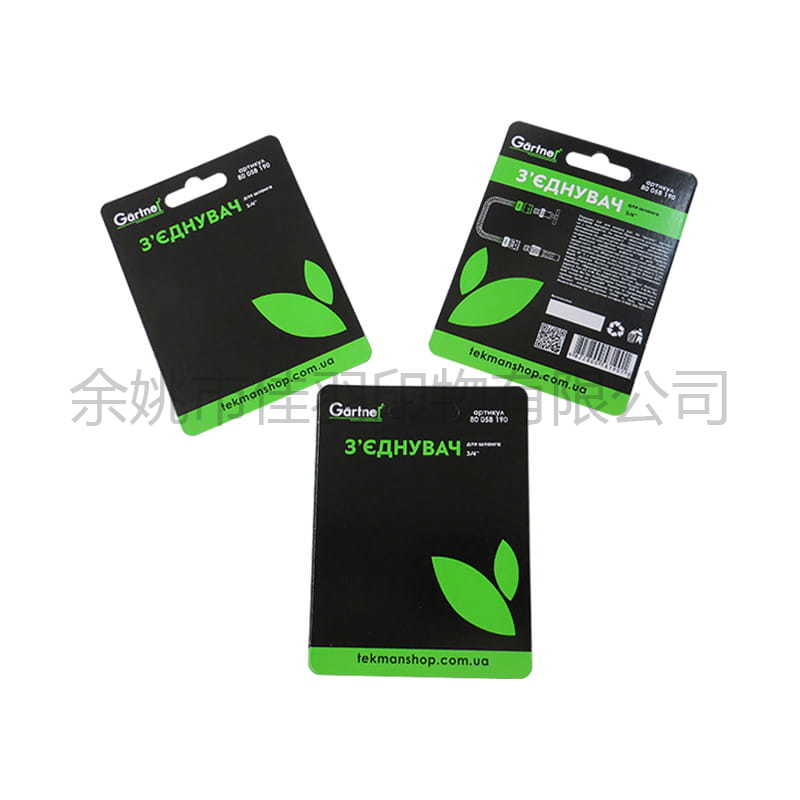
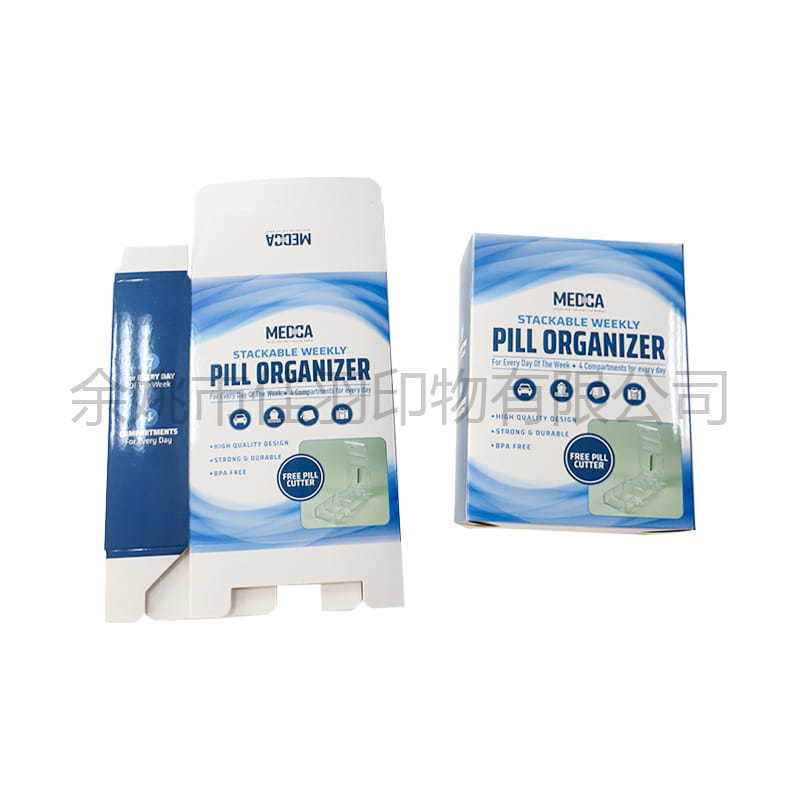
Two products from our own catalog show the path from flat sheet to shelf-ready item.
The white paper blister card above begins as a coated printing sheet that is printed, finished and die cut so a retailer can hang a product securely on a hook. The same board logic scales up into packaging, where a printed box must hold square corners after die cutting, which is why the aspect ratio and grain of the original sheet matter long before the box is folded.
Our teams apply these calculations on international orders every week, because a customer in a Letter country and a customer in an A4 country often order the same item in different trim sizes. If you want to see how a working pressroom turns sheet mathematics into finished goods, read our article on paper printing as a mutual combination of tradition and innovation, or the piece on injecting innovation into the printing industry.
The next time a form, a printer menu or a supplier asks for the name of that familiar sheet, the answer is simple: it is Letter, formally ANSI A, 215.9 by 279.4 millimeters in metric terms. A4 remains its taller, slightly narrower international counterpart, Legal and Tabloid extend the inch-based family, and every one of these names ultimately describes how a larger sheet is cut down to the page in your hand. Using the correct name keeps quotations accurate, files printable and production schedules predictable, which is exactly what a size standard is supposed to do.
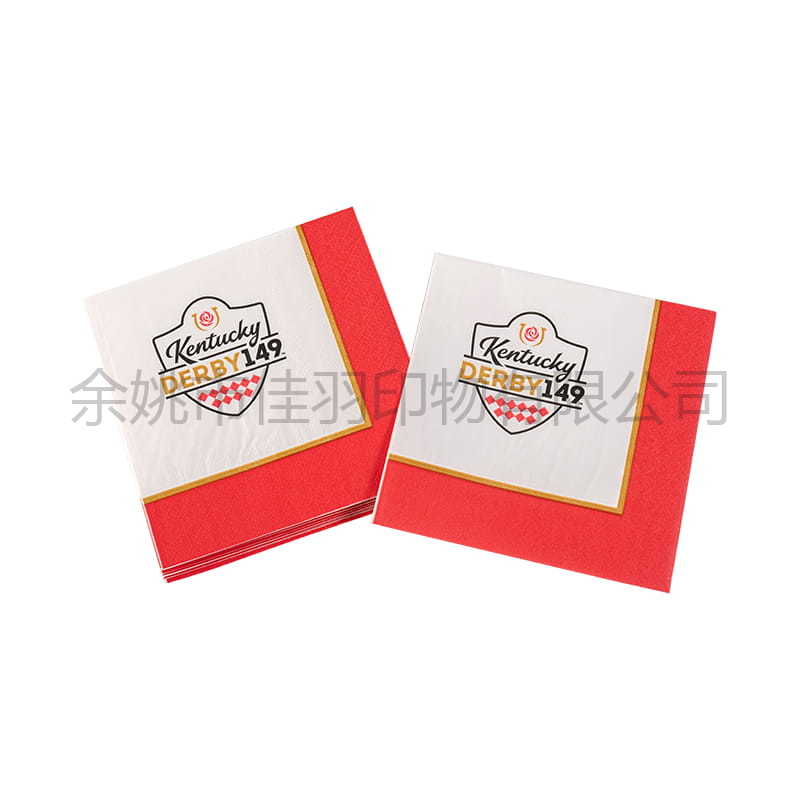
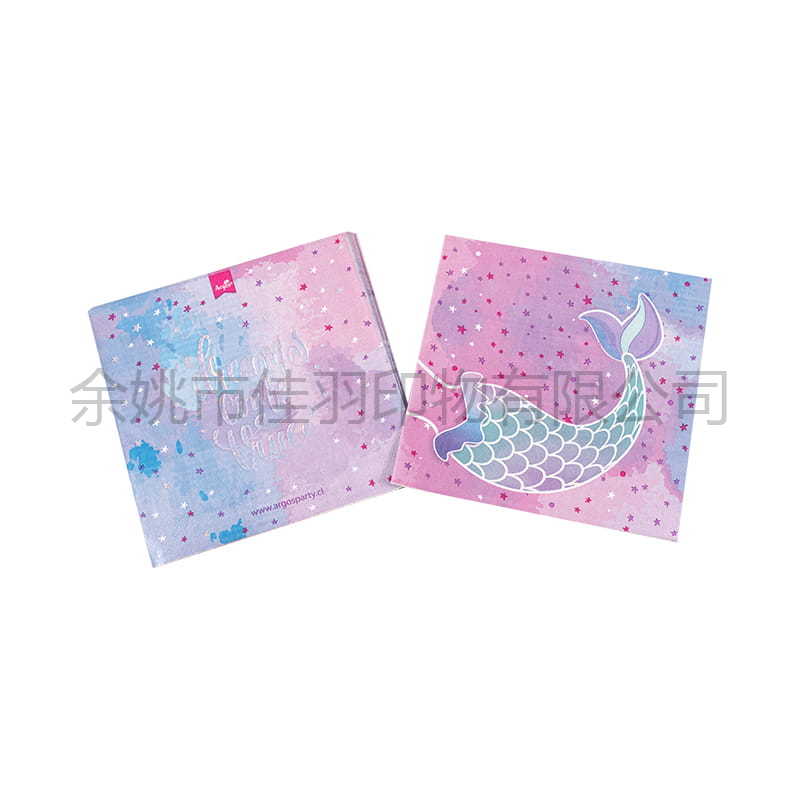
25cm KD printed paper towels have a variety of advantages, at the same time, the pattern on the napkin can be customized according to any requirements, whether it is a floral design, geometric pattern...
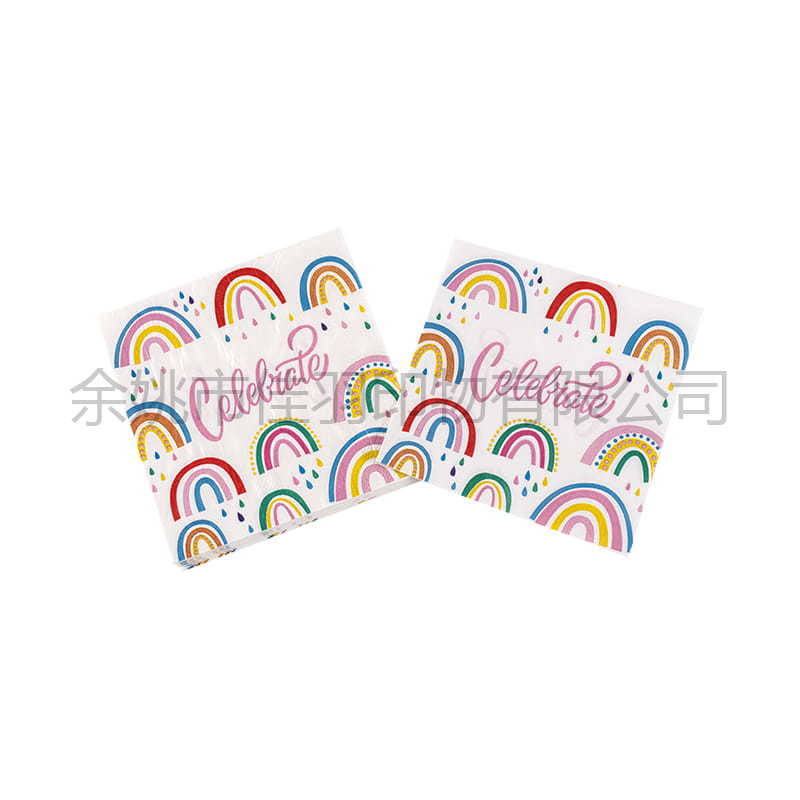
25cm Rainbow Print Napkin- This napkin is specially designed for holiday celebrations, specially designed napkins with print, rainbow print is full of joy and celebratory feelings.
The print on it ca...
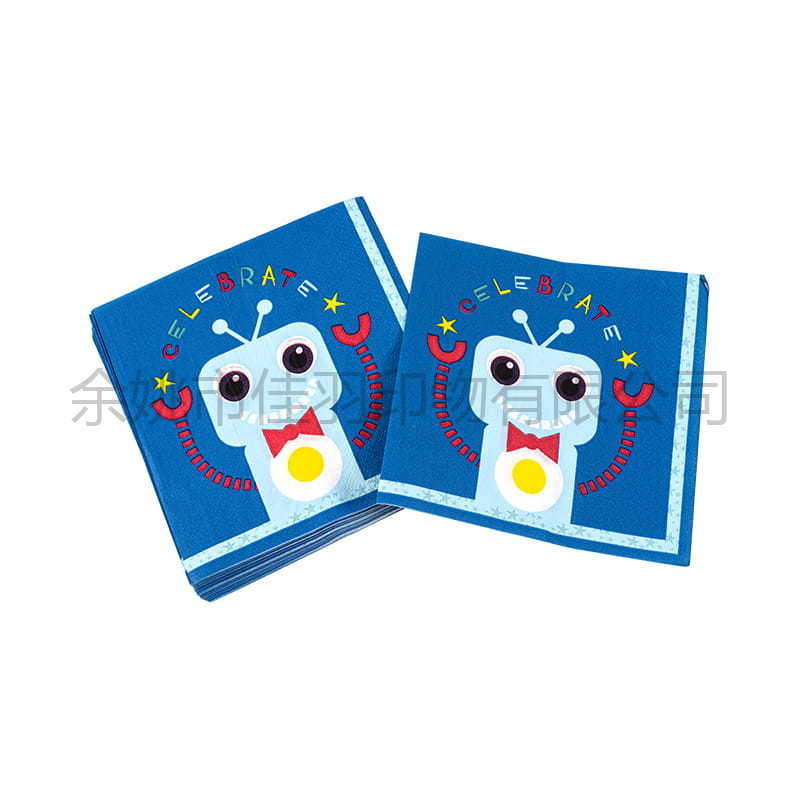
This is a 25cm*25cm napkin printed with the logo of a cute robot, this robot napkin is a must-have item on the children's table. Fun robot-themed prints add a futuristic touch to your packaging, in ad...
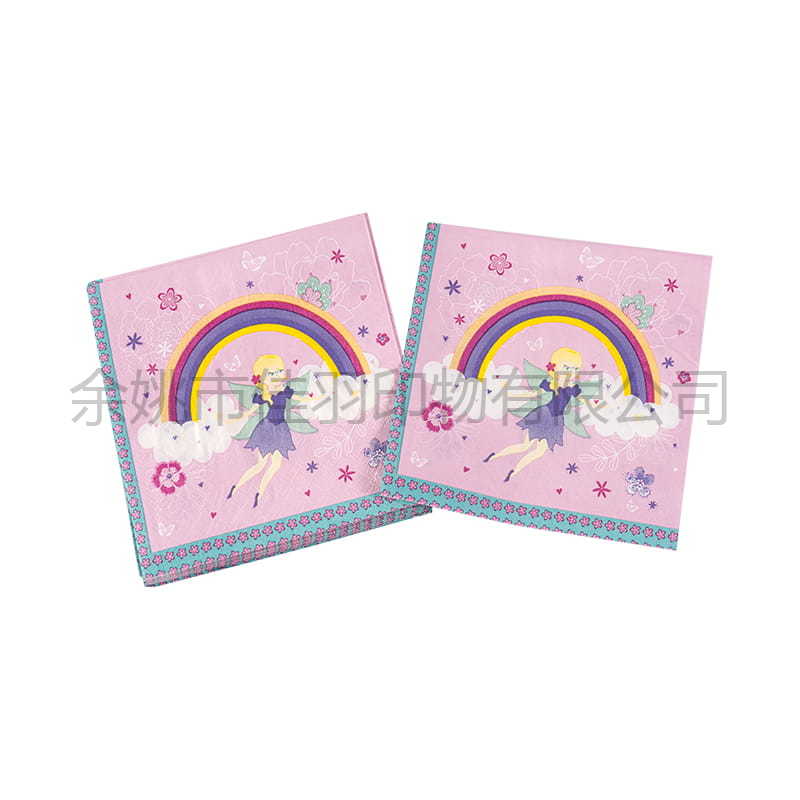
The 25cm fairy print tissue is designed to enhance the overall experience of women. The unique fairy-themed print not only gives the paper towel an eye-catching look but can also be customized to your...
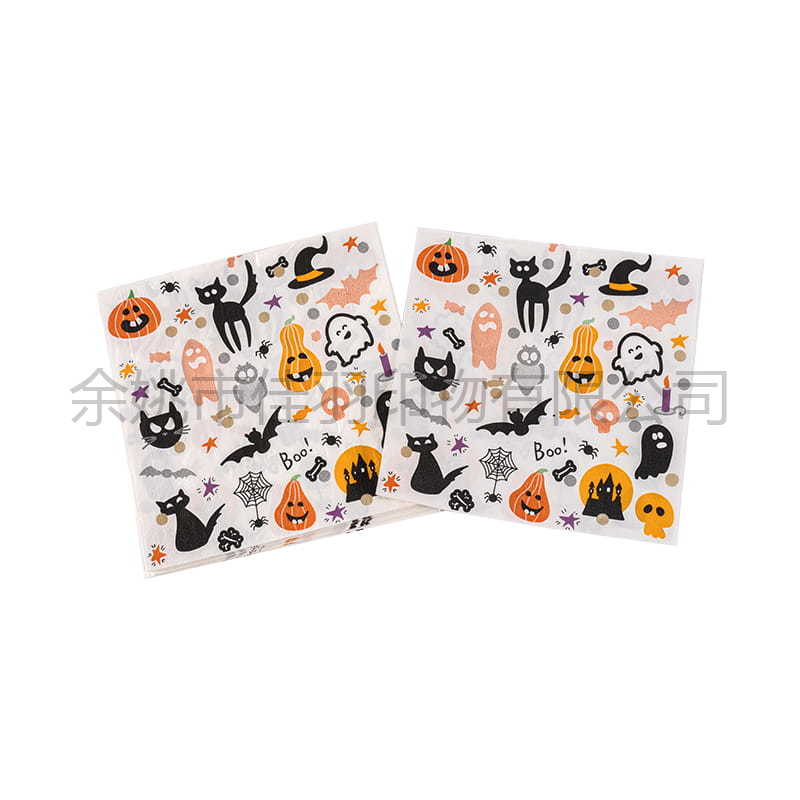
Designed for Halloween, this tissue is sized to handle a variety of packaging needs, from small Halloween gifts to grand celebrations. The design incorporates an intriguing Halloween element, making e...
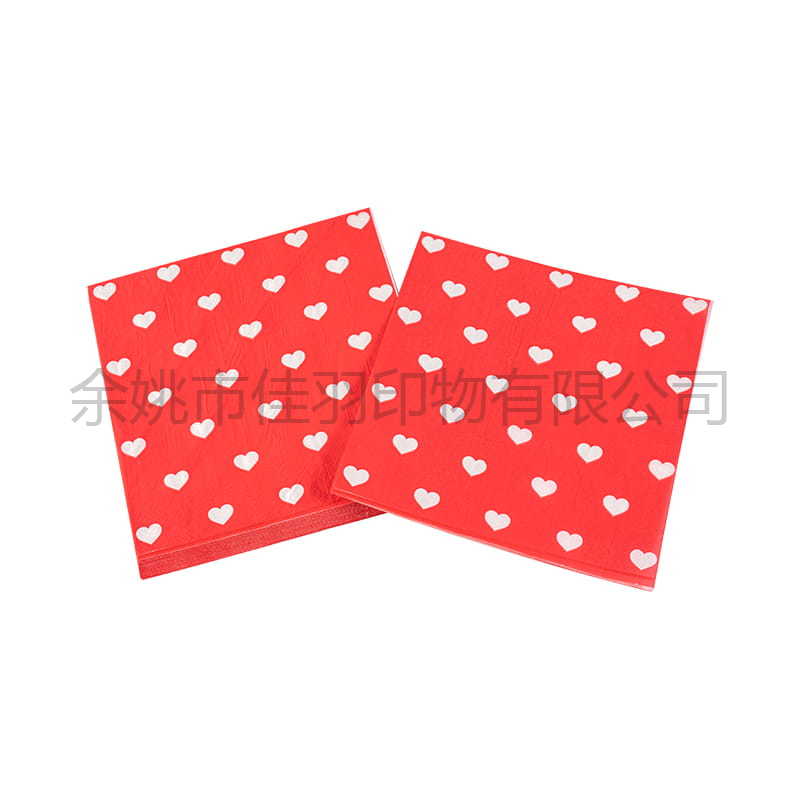
This special Valentine's Day tissue is covered with small hearts and covers the entire tissue. We designed this 33cm Valentine's Day tissue, each one has a lot of small hearts so that your gift packag...
This 33cm bronzing embossed lace paper towel incorporates a delicate embossing process, which is soft and comfortable, and has good water absorption. At the same time, the interesting colors and delic...
The 33cm hot rose gold paper towel comprehensively considers many factors such as material, environmental protection, practicality and appearance design. Inject a touch of artistic quality into everyd...
The 33cm hot silver paper towel adopts a unique hot silver stamping process, and its exquisite print design adds a lot of color to daily life, we are constantly paying attention to the comfort of the ...
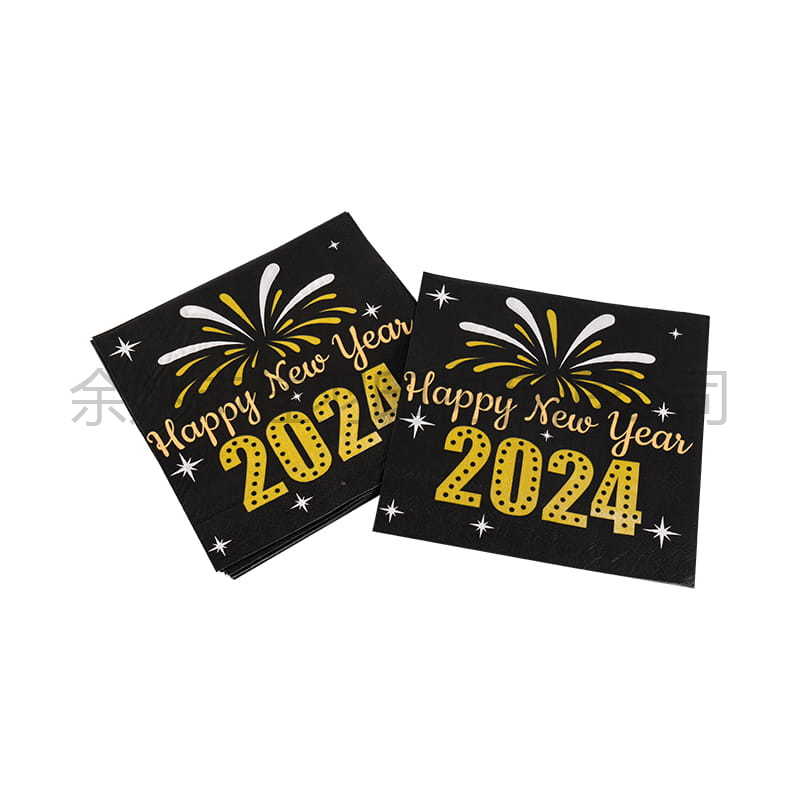
The 33cm New Year paper towel is an eco-friendly and sustainable product that is made with eco-friendly materials, providing buyers with a more eco-friendly option. Unique print patterns can be custom...
The 7-inch round paper plate, with a diameter of 17.8 cm (Φ17.8), is a common tableware and supplies, usually used for parties, parties, catering occasions, etc.
Material: The 7-inch round paper tray...
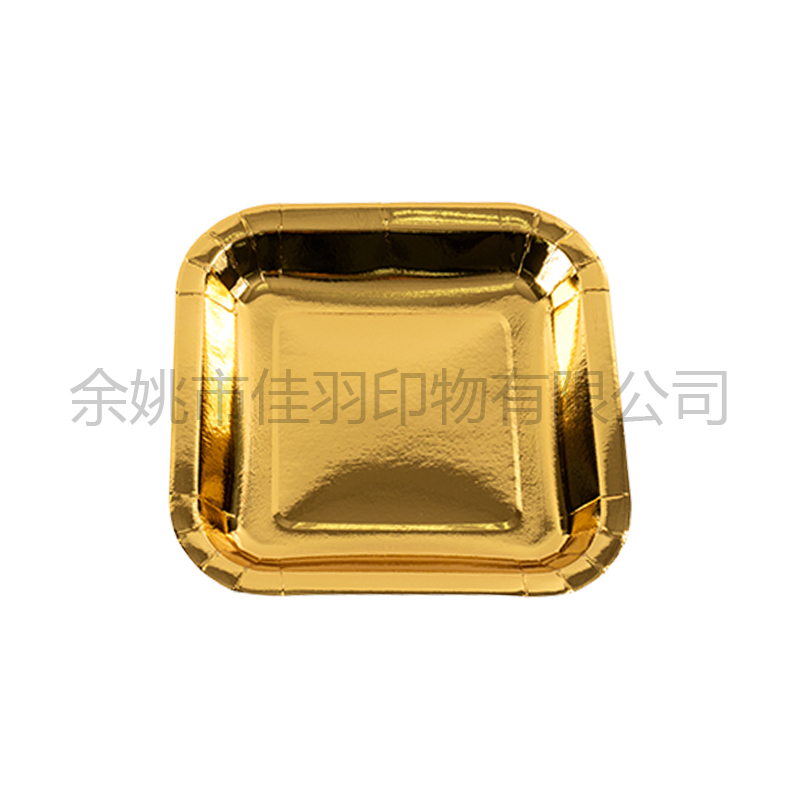
8-inch gold square paper plate to add a luxurious atmosphere to your special occasion. This clever design of this square paper plate not only provides more space for food storage but also presents a m...
 English
 中文简体
中文简体 Español
 Deutsch

 No.71, Xiafan, Panxiang Village, Yangming Street, Yuyao City, China.
 491791889@qq.comsales@jiayuprint.com
 +86-13186866868
 +86-0574-62587484