Order an A4 flyer in Seoul, Berlin or Madrid and you get a sheet of 210 by 297 mm. Order the same flyer from a printer whose trays are set for US Letter and you get 216 by 279 mm, the layout moves, and someone has to redo the file. Sheet size is not a detail at the bottom of a job bag; it decides how the text sits, how the piece folds, which envelope it slides into and how much paper you actually pay for.
The short answer first: A4 is 210 x 297 mm, or 8.27 x 11.69 inches, with an area of 62,370 square mm and a fixed ratio of 1 to 1.414. Everything practical follows from those numbers, including the halving rule that puts two A5 pages on one A4, the 3 mm bleed that turns an A4 layout into a 216 x 303 mm document, and the fold lines that decide between a C5 and a DL envelope.
A4 is one step in a halving system, not an arbitrary sheet
The ISO A series begins at A0, a sheet of one square metre trimmed to 841 x 1189 mm. Cut it across the long edge and you have A1 at 594 x 841 mm; cut again for A2, A3 and A4. Each step halves the area while keeping the same proportion, so the shape of the page never changes, only the scale. A4 is exactly one sixteenth of a square metre, which is why the numbers are slightly awkward to memorise and easy to calculate from.
That single rule explains most of the useful behaviour. Two A5 pages sit side by side on an A4 with almost no waste, four A6 cards fit on one A4 sheet, and two A4 pages placed long edge to long edge make an A3 spread. For anyone laying out a brochure or a leaflet, the system means a design can be scaled from A6 to A3 without rethinking the grid.
Weight becomes predictable too. At 80 gsm, one A4 sheet weighs roughly 5 g, so a 500 sheet ream comes to about 2.5 kg. At 160 gsm the same sheet is close to 10 g, and a thousand sheets land near 10 kg, which matters the moment freight or postage enters the quote.
Nominal ISO A series sizes compared with US Letter; areas are calculated from the trim dimensions and ignore cutting tolerance.
| Size |
Dimensions in mm |
Dimensions in inches |
Area in square mm |
| A3 |
297 x 420 |
11.69 x 16.54 |
124,740 |
| A4 |
210 x 297 |
8.27 x 11.69 |
62,370 |
| A5 |
148 x 210 |
5.83 x 8.27 |
31,080 |
| B5 |
176 x 250 |
6.93 x 9.84 |
44,000 |
| US Letter |
215.9 x 279.4 |
8.5 x 11 |
60,320 |
A4 and US Letter differ by millimetres and by reprints
US Letter measures 215.9 x 279.4 mm, so it is roughly 6 mm wider and 18 mm shorter than A4. The gap sounds trivial until artwork lands on the wrong sheet. Filling the width of Letter with A4 artwork needs an enlargement of about 3 percent, which pushes content off the bottom edge; shrinking the job to fit the height instead leaves white bands at the sides and a text block that no longer matches the proof.
Two habits prevent the problem. Write 210 x 297 mm on the purchase order instead of the word A4 alone, and ask for 100 percent output with no fit to page scaling. Then allow for cutting tolerance: ISO 216 permits a deviation of about 1.5 mm on dimensions up to 150 mm and about 2 mm on dimensions between 150 and 600 mm. A sheet that is fully within specification can still differ by 2 mm from the previous delivery, which is enough to jam a folder or misalign a perforation on tear-off cards.
Choosing a paper weight that matches how the sheet is handled
- 70 to 80 gsm uncoated: multi-page documents, manuals, letterheads, anything folded, stacked and mailed in volume.
- 90 to 120 gsm: brochures, menus and price lists that are picked up and turned many times but still need to fold cleanly.
- 130 to 170 gsm: covers, folded leaflets and handouts that must feel firm without cracking along the spine.
- 200 to 250 gsm: postcards, presentation covers and inserts expected to stay flat on a table.
- 300 to 350 gsm: hang tags, backing cards and stiff covers, which need a score line before every fold.
Grain direction matters more than most buyers expect. Fold a sheet parallel to the grain and the fold is clean; fold against it and the coating can split, showing raw fibre along the crease. On stock heavier than about 200 gsm, request a score on every fold and confirm the grain before the layout is locked, because changing grain after imposition usually means reprinting.
Bleed, trim marks and how many A4 pages fit a press sheet
An A4 layout with 3 mm bleed on all four sides becomes a 216 x 303 mm document. Keep live text, logos and barcodes at least 5 mm inside the trim, so a small drift during cutting never eats a heading or crops a registered mark.
Press sheets rarely match A4 exactly. SRA3 at 320 x 450 mm carries two A4 pages with room for crop marks and a colour bar, while SRA4 at 225 x 320 mm takes a single A4 page with bleed plus the gripper edge the press needs. Imposing two-up or four-up changes the grain direction of the finished piece, so state the required grain before the layout is fixed. This is also where offset and digital workflows part company, since how printing and paper handling work together decides whether a short run is cheaper printed digitally or grouped with other jobs on a large sheet.
Fold patterns and the envelope that follows
- C4 at 229 x 324 mm takes an A4 sheet flat, unfolded, with a few millimetres of clearance.
- C5 at 162 x 229 mm takes an A4 sheet folded once down to A5, the most common mailing format.
- DL at 110 x 220 mm takes an A4 sheet folded in three, with panels of roughly 99 mm.
- C6 at 114 x 162 mm takes an A4 sheet folded twice, down to A6.
- B5 at 176 x 250 mm takes a single fold with extra room, useful when the stock is thick.
Tri-folds need one further decision. The panel that folds inward should be about 2 to 3 mm narrower than the front panel, otherwise the folded edge buckles the paper and the piece will not close flat. If the job is going through the post, check the thickness limit as well: many postal services treat anything above roughly 5 mm as a large letter, and a folded 250 gsm sheet with a card insert can cross that line without anyone noticing at the design stage.
Where A4 sheets turn into packaging and retail print
Not every A4 job stays flat. Instruction sheets, care cards, backing cards for blister packs, hang tags and small promotional prints are usually laid out on A4 or A3 and then die cut, so the file has to respect the die line and not just the trim. A retail backing card that measures 1 mm over the die opening will bow on the shelf; one that measures 1 mm under will rattle in the pack.
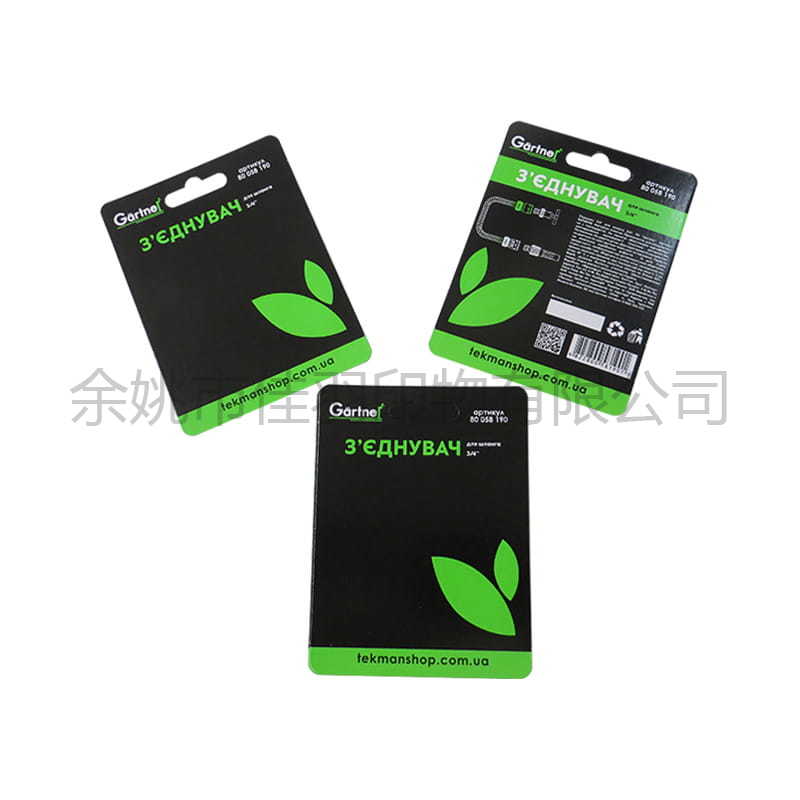 Custom White Paper Blister Cards for Retail PackagingA custom white paper blister card for small electronic and retail items, offering protective, reusable packaging and customizable formats for die-cut backing-card applications.View Product →
Presentation packaging works from the other direction. A printed A4 insert or sleeve inside a folded gift packaging box carries the brand story that the outer surface cannot hold, and the insert should be cut slightly under the internal dimension so it drops in without flexing. Thickness matters here as well: an insert heavier than the box wall allowance can dent the lid or stop the two halves from closing flush.
The same reasoning applies to folded cartons, where the printed sheet is simply the raw material. Board grade, grain, coating and the direction of the glue flap all change how the finished box behaves on an automated filling line, which is why packaging buyers tend to confirm caliper and tolerance before they discuss colour.
A short spec sheet to send with an A4 enquiry
- Trim size written out in full, for example 210 x 297 mm, plus the acceptable tolerance of 2 mm.
- Bleed of 3 mm and a safe area of 5 mm from the trim on every side.
- Grammage and finish, such as 150 gsm silk or 250 gsm matte coated, with a note on coated or uncoated.
- Grain direction and every fold, including the narrower inner panel on a tri-fold.
- Proof type and colour reference, so that the approved sheet matches the press run.
- Quantity with the usual over or under allowance of about 5 to 10 percent on long runs.
- Delivery state, flat or folded, and packing per carton, especially for export shipments.
A4 work goes smoothly when the numbers are agreed before plates are made: 210 x 297 mm with a 2 mm tolerance, a 3 mm bleed, a stated grammage and grain, and a named envelope or box. Everything after that is craft and scheduling. Yuyao Jiayu Printing produces brochures, calendars, manuals, paper cards and colour printed packaging from multi-colour offset presses and binding lines, and develops items from customer drawings or samples, so a spec sheet that names sizes and tolerances is enough to start a quotation rather than a round of questions.
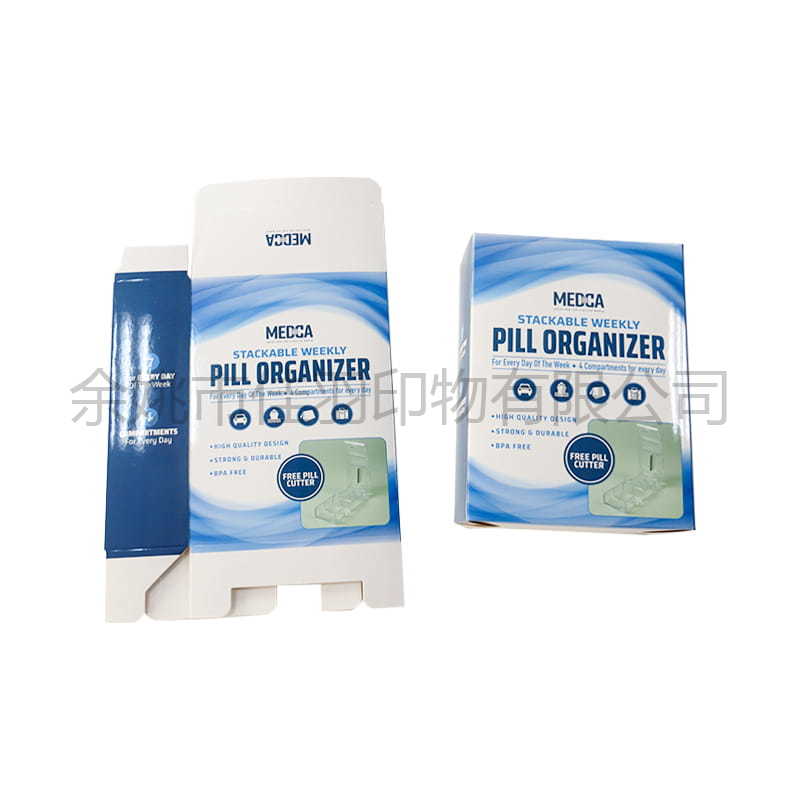 Custom White Card Color Printed Packaging BoxA customizable white cardboard box for gifts, accessories, and collectibles, with smooth print-ready surfaces and recyclable construction suited to branded retail packaging.View Product →
 English
 中文简体
 Español
 Deutsch



 No.71, Xiafan, Panxiang Village, Yangming Street, Yuyao City, China.
 491791889@qq.comsales@jiayuprint.com
 +86-13186866868
 +86-0574-62587484
