Most plain white Paper Plate products can be safely heated in the microwave, but the answer depends entirely on what the plate is made from and what coatings or inks it carries. The USDA confirms that plain white paper and white paper plates are generally safe to heat in the microwave (Source: Jolly Chef, Tips for Microwaving Bulk Paper Plates, citing USDA guidance). However, plates with metallic printing, plastic PE coatings not rated for heat, decorative dyes, or foam backing require individual checking before use. The safest and most reliable approach is to look for a microwave-safe label or symbol on the plate or its packaging before heating. If no label is present, assume the plate is not rated for microwave use and transfer the food to a confirmed microwave-safe container instead.
Why Not All Paper Plates Are Microwave Safe
The name paper plate implies a simple, single-material product, but most commercially produced paper plates combine several materials: a paper pulp base, a surface coating or laminate for moisture resistance, printing inks for decoration or branding, and sometimes a foam or layered backing for rigidity. Each of these components behaves differently when exposed to microwave energy, and it is the coatings and inks, not the paper fiber itself, that create safety concerns.
Emerald Ecovations explains this clearly: using non-microwave-safe paper plates can pose risks including melting of coatings, chemical leaching into food, or fire hazards, because microwave energy heats everything present in the cooking chamber, not just the food (Source: Emerald Ecovations, Can Paper Plates Go in the Microwave? Explained). The paper fiber substrate is generally inert to microwave energy, but a plastic laminate that softens at low temperatures, or metallic ink used in printed designs, can become a serious problem once the plate heats up.
The FDA regulates food contact materials under food safety law and requires that all food packaging comply with Good Manufacturing Practices, but the agency does not publish a specific approved list of microwave-safe paper plates. The practical implication is that the microwave-safe designation is applied at the manufacturer level based on the materials used, and buyers need to verify that designation rather than assuming it applies to all paper plates equally (Source: Jolly Chef, Tips for Microwaving Bulk Paper Plates, citing FDA guidance).
Types Of Paper Plates And Their Microwave Safety
Understanding which types of paper plates are and are not safe for the microwave requires looking at the specific material composition of each category.
Plain White Uncoated Paper Plates
Plain white paper plates made from unbleached or bleached paper pulp without any additional coatings, printed designs, or laminates are the safest category for microwave use. The USDA's position that white paper and paper plates are generally safe for microwave heating applies specifically to this category (Source: Jolly Chef, Tips for Microwaving Bulk Paper Plates, citing USDA). These plates contain no plastic films to melt, no metallic inks to arc, and no chemical coatings to leach. The limitation is practical rather than chemical: uncoated paper plates have no moisture barrier, so food with high liquid content will eventually soak through and weaken the plate during heating.
Sugarcane Bagasse Plates
Plates made from sugarcane bagasse, the fiber byproduct of sugar processing, are a leading category in the microwave-safe space. Bagasse has a notably higher thermal ceiling than standard paper pulp. Jolly Chef's product testing data reports sugarcane bagasse plates achieving heat resistance up to 248 degrees Fahrenheit, which comfortably exceeds the surface temperatures generated by typical microwave food reheating (Source: Jolly Chef, Microwave Safe Paper Plates: Material, Certification and Catering Tips). Bagasse plates also contain no plastic lining in most formats, which eliminates the risk of chemical migration from film coatings. The USDA reheating guideline recommends bringing food to an internal temperature of 165 degrees Fahrenheit to eliminate potential pathogens, and bagasse plates handle this temperature with significant margin remaining (Source: Jolly Chef, citing USDA Food Safety and Inspection Service).
PE-Coated Paper Plates
Many standard paper plates carry a thin polyethylene coating on the food contact surface to provide moisture resistance and prevent soak-through. Whether a PE-coated plate is microwave safe depends on the specific grade and thickness of the polyethylene film used. Jolly Chef notes that many commercial PE-coated plates are labeled microwave safe for short reheating periods, making them suitable for most catered meals (Source: Jolly Chef, Microwave Safe Paper Plates, citing food contact materials guidance). However, plates with heavier PE coatings, or those using lower-grade polyethylene not tested for thermal stability, may soften or deform at microwave food temperatures, which is why label verification remains essential even for this common plate type.
Foam, Metallic, And Printed Decorative Plates
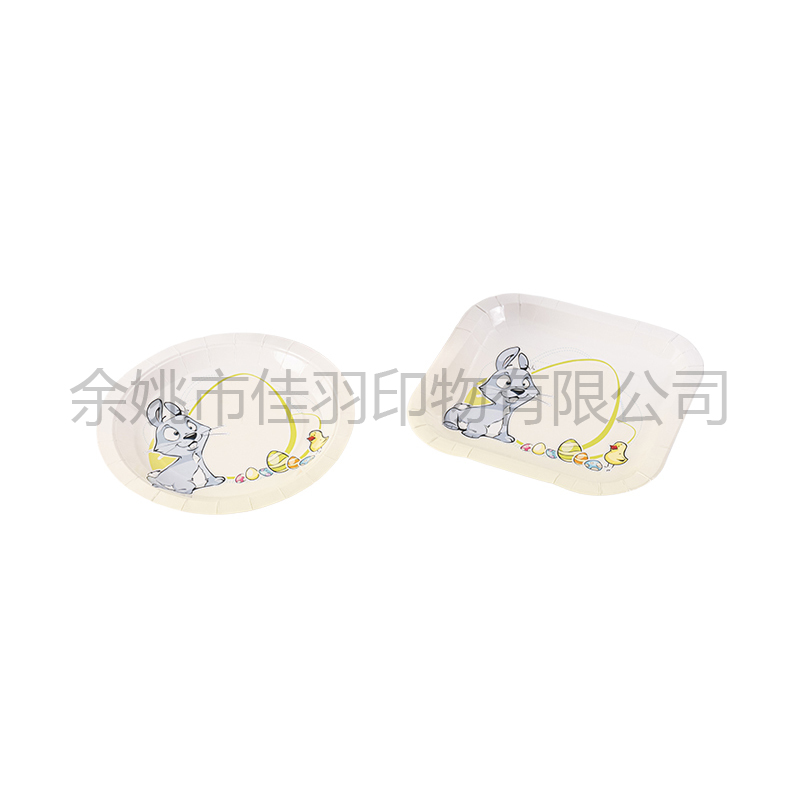
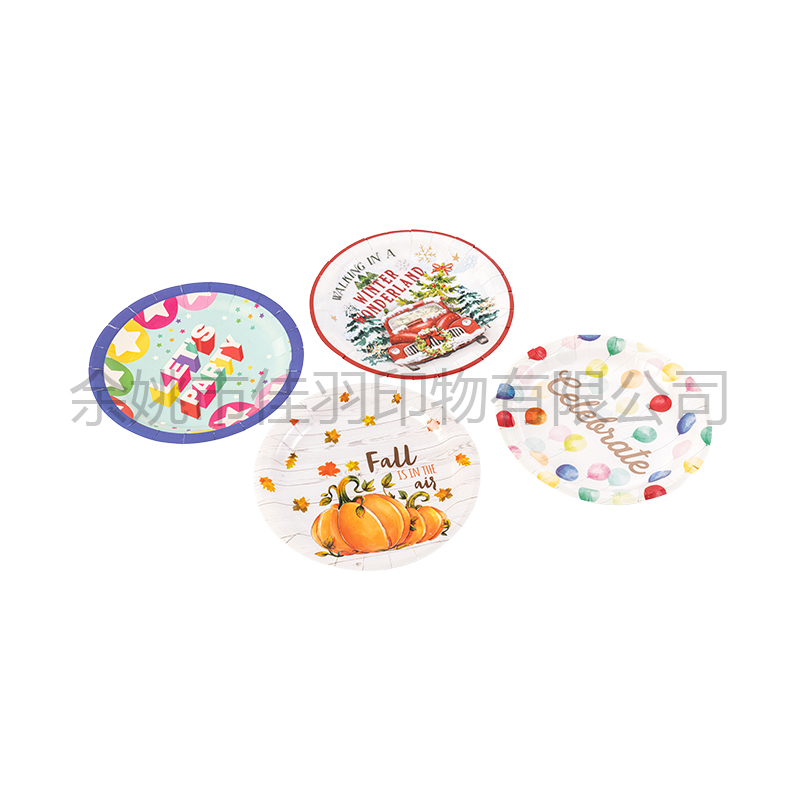
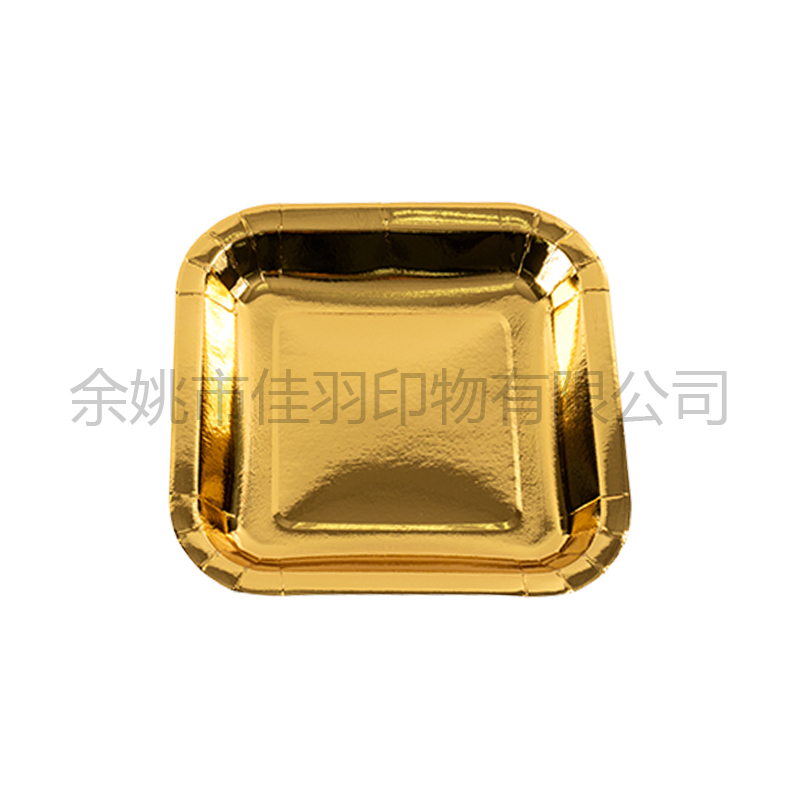
Three categories require firm caution. Foam-backed paper plates, which use expanded polystyrene for rigidity, can soften and potentially release chemical compounds when heated, and should not be used in the microwave unless specifically rated and labeled for that purpose. Plates with metallic printing, foil borders, or metallic decorative elements create a serious risk of arcing and sparking inside the microwave, which can damage the appliance and potentially start a fire. Decorative paper plates with bright printed designs using unknown ink formulations are also best avoided unless the manufacturer explicitly labels them as microwave safe, since some printing inks contain compounds not tested or approved for food contact at elevated temperatures (Source: Emerald Ecovations, Can Paper Plates Go in the Microwave? Explained).
| Plate Type |
Microwave Safety |
Notes |
| Plain white uncoated paper |
Generally safe |
No moisture barrier, soaks through quickly with wet food |
| Sugarcane bagasse |
Safe up to 248 F when labeled |
High heat resistance, no plastic lining, preferred for hot food |
| PE-coated paper plates |
Check label required |
Many rated for short reheating, not all PE grades are heat stable |
| Foam-backed plates |
Avoid unless labeled |
Polystyrene can soften at microwave food temperatures |
| Metallic or foil printed plates |
Never microwave |
Risk of arcing, sparking, and fire |
| Decorative printed plates |
Check label required |
Ink formulation determines safety, verify manufacturer labeling |
How To Check If A Paper Plate Is Microwave Safe
Identifying a microwave-safe paper plate is straightforward once you know what to look for, but it requires actively checking rather than assuming based on appearance.
- Check the bottom or side of the plate for the words microwave safe printed directly on the product
- Look for the microwave-safe symbol, which is typically a small square containing a wavy line representing microwave radiation (Source: Jolly Chef, Are Paper Plates Microwave Safe, citing FDA guidance on food contact material labeling)
- Check the original packaging if the plate is still in it, since safety information is sometimes printed on the outer packaging rather than on every individual plate
- Look for food-grade material certification references such as FDA compliance or BPA-free labeling, which indicate the manufacturer has conducted safety testing on the materials used
- If the plate has any metallic design elements, assume it is not microwave safe regardless of any other labeling
- If no label or symbol is present and the material composition is unclear, do not microwave the plate
Jolly Chef advises that if a paper plate warps, smokes, or gives off an odor while heating, the microwave should be stopped immediately to avoid potential safety risks, even if the plate was believed to be microwave safe (Source: Jolly Chef, Are Paper Plates Microwave Safe). Warping or odor indicates that a coating or component of the plate is not thermally stable at the temperature reached.
Safe Microwaving Practices For Paper Plates
Even when using a confirmed microwave-safe paper plate, the way you use the plate during heating affects both safety outcomes and how well the food heats.
Use Short Heating Intervals
The most consistent safety guidance for microwaving food on paper plates is to heat in short bursts of around 30 seconds rather than running a long continuous cycle. This approach prevents localized heat buildup at the interface between the food and the plate surface, which is where any coating is most likely to exceed its temperature rating. Jolly Chef specifically recommends heating food in 30-second intervals to avoid warping and keep plates safe, even for plates certified as microwave safe (Source: Jolly Chef, Tips for Microwaving Bulk Paper Plates). Between each interval, check the food temperature and the plate condition before resuming.
Avoid High-Fat And High-Sugar Foods For Extended Heating
Fat and sugar absorb microwave energy more intensely than water and can reach temperatures significantly above boiling point during microwave cooking. Foods high in fat or sugar, such as bacon, cheese sauces, or syrup-glazed dishes, can generate localized surface temperatures that exceed the safe range of most paper plates even when the average food temperature is moderate. For these food types, it is safer to transfer food to a glass or ceramic dish for heating and serve on the paper plate afterward.
Do Not Stack Plates Without Space Between Them
Stacking paper plates directly on top of each other during microwave heating reduces airflow between the surfaces and creates uneven heat distribution. Jolly Chef recommends stacking plates with space between them for even heating, which also prevents cold spots in the food and reduces the risk of any single plate surface overheating (Source: Jolly Chef, Tips for Microwaving Bulk Paper Plates).
Paper Plates Are Microwave Only, Not Oven Or Air Fryer
A microwave-safe rating applies only to microwave ovens and not to conventional ovens, toaster ovens, or air fryers. Jolly Chef makes this distinction clearly: microwaveable paper plates are designed for short-term microwave heating only, and high temperatures in ovens or air fryers can cause them to char, warp, or catch fire (Source: Jolly Chef, Are Paper Plates Microwave Safe). The dry heat of a conventional oven operates very differently from the electromagnetic heating of a microwave and can bring paper surfaces to temperatures that cause ignition.
What Happens To Paper Plates At Different Microwave Temperatures
Understanding the temperature dynamics inside a microwave helps explain why some paper plates fail during heating even when the food appears to be at a safe temperature.
A patent-referenced study testing paper plates under microwave conditions found that a plain paper plate surface reached temperatures ranging from 152 to 185 degrees Fahrenheit when used as a base for heating a frozen lasagna for five minutes (Source: USPTO Patent 10744699, Polyethylene Terephthalate Foam Plate). This range, while within the capability of a bagasse plate rated to 248 degrees Fahrenheit, would stress a plate whose PE coating has a lower softening temperature, and would approach the limits of some standard PE-coated plates not specifically engineered for heat resistance.
The implication for everyday use is that even a modest reheating cycle, five minutes in a standard microwave, exposes a paper plate to temperatures well above room temperature. A plate that merely feels warm to the touch may have experienced localized temperature spikes significantly higher at the food contact surface where energy absorption is concentrated. This is why the microwave-safe label from the manufacturer, based on actual testing, is a more reliable guide than visual inspection or a brief touch test.
Compostable Paper Plates And Microwave Use
Compostable paper plates, including those made from sugarcane bagasse, bamboo fiber, or wheat straw, have become increasingly common, and their microwave behavior is generally favorable compared with conventional paper plates.
Jolly Chef's guidance on compostable plates confirms that they usually perform well in the microwave, but recommends using short bursts of heating and notes that plates without plastic lining work best (Source: Jolly Chef, Tips for Microwaving Bulk Paper Plates). Some plates made from cornstarch-based PLA bioplastic as a binding agent may soften if heated for extended periods, since PLA has a lower softening temperature than traditional polyethylene. Always read the temperature limit labeling on compostable plates just as carefully as on conventional ones.
The Jolly Chef environmental guide also notes that sugarcane bagasse does not melt or leach chemicals the way polystyrene foam does, and that organizations including the Environmental Working Group highlight the benefits of moving away from certain plastics in food contact for both health and environmental reasons (Source: Jolly Chef, Microwave Safe Paper Plates, citing Environmental Working Group). For households or foodservice operators choosing paper plates for both microwave use and reduced environmental impact, bagasse plates rated for microwave use represent the clearest alignment of those two priorities.
Choosing The Right Paper Plate For Your Needs
Not every occasion requires the same type of paper plate, and matching the plate to its intended use avoids both safety issues and unnecessary waste of plates that are over-specified for cold serving situations.
- For cold food serving only, any food-grade paper plate is appropriate regardless of microwave rating, since no heat exposure is involved
- For warming or reheating food briefly in the microwave, choose a plate explicitly labeled microwave safe, made from plain paper or sugarcane bagasse without metallic inks
- For hot food that needs extended reheating at higher temperatures, choose bagasse plates rated to 248 degrees Fahrenheit or transfer food to glass or ceramic for heating and serve on the paper plate
- For party or event use where decorative printing is important, verify the specific plates chosen carry a microwave-safe label before planning to use the microwave during the event
- For catering, foodservice, or high-volume use where reheating consistency matters, prioritize food-grade FDA-compliant plates with clear printed microwave safety certification on both individual plates and bulk packaging
The Jiayuprint Paper Plate range is produced to food-grade standards using materials selected for safe contact with food, providing a reliable starting point for buyers who need to match plate specification to their intended heating and serving requirements.
 English
 中文简体
中文简体 Español
 Deutsch
 No.71, Xiafan, Panxiang Village, Yangming Street, Yuyao City, China.
 491791889@qq.comsales@jiayuprint.com
 +86-13186866868
 +86-0574-62587484