The main differences between paper plates and plastic plates come down to durability, environmental impact, cost, and suitability for different food types. Paper plates are lighter, more eco-friendly, compostable in many cases, and better suited to dry or lightly sauced foods at casual events. Plastic plates are stronger, moisture-resistant, reusable in some forms, and better suited to heavier, wetter, or hotter foods — but they carry a significantly higher environmental cost and face growing regulatory restrictions in many countries. The right choice depends on the specific use case, the food being served, and how much weight you place on environmental considerations.
Material Composition and How Each Plate Is Made
Understanding what each plate is made of explains most of the practical differences between them.
Paper Plates
Paper plates are made from compressed wood pulp — the same cellulose fiber base used in cardboard and paperboard — formed under heat and pressure into a plate shape. Standard paper plates consist of multiple layers of paperboard with a total thickness of 0.5 to 1.5 mm. Most paper plates receive a thin coating of clay, wax, or a polyethylene (PE) film on the food-contact surface to improve moisture resistance and prevent immediate soaking when wet foods are placed on them. Some premium paper plates use bagasse (sugarcane fiber) or bamboo pulp as an alternative to virgin wood pulp.
Plastic Plates
Disposable plastic plates are injection-molded or thermoformed from petroleum-derived polymers — most commonly polystyrene (PS), polypropylene (PP), or polyethylene terephthalate (PET). Polystyrene produces the rigid, foam-like plates common at fast food outlets; polypropylene produces the clearer, more flexible plates seen at upscale disposable tableware ranges; PET is used for transparent, glass-like plates. Reusable plastic plates are typically made from heavier-gauge PP or melamine resin, which is a hard thermoset plastic capable of withstanding repeated washing.
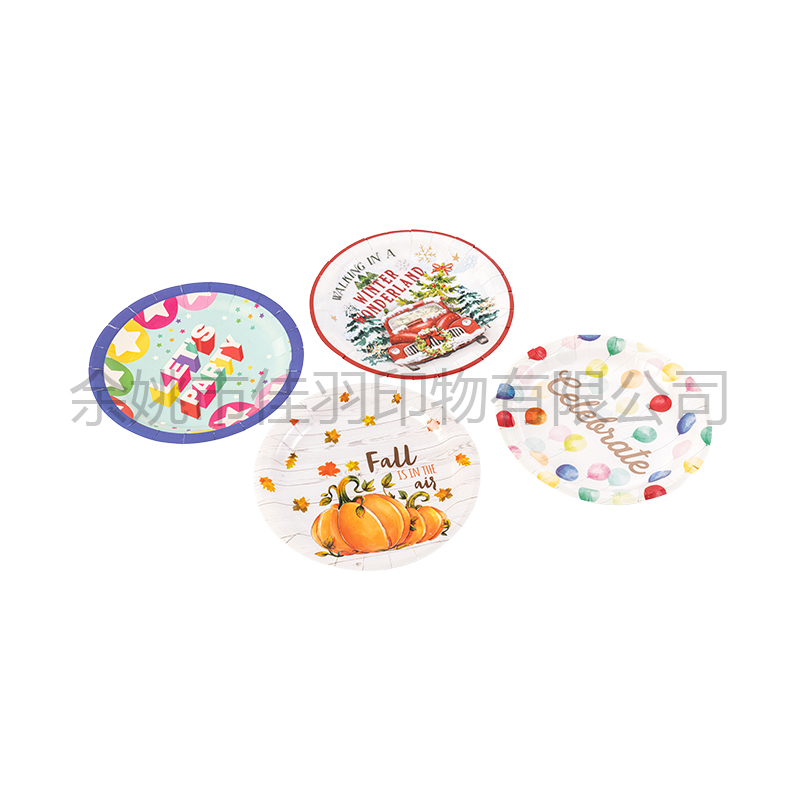
Comprehensive Side-by-Side Comparison
| Feature |
Paper Plates |
Plastic Plates |
| Base material |
Wood pulp / plant fiber |
Petroleum-derived polymer (PS, PP, PET) |
| Strength / rigidity |
Moderate — can flex under heavy loads |
High — holds shape under heavy food loads |
| Moisture resistance |
Low–moderate (coating helps short-term) |
High — impermeable to water and oils |
| Heat resistance |
Limited — not suitable for very hot foods |
Varies — PP tolerates moderate heat; PS softens |
| Weight |
Very light (5–15g per plate) |
Light to moderate (10–30g disposable) |
| Cost per plate |
Generally lower |
Slightly higher (disposable); much higher (reusable) |
| Compostability |
Yes (uncoated or PLA-coated versions) |
No — requires industrial recycling or landfill |
| Recyclability |
Limited when food-soiled or PE-coated |
Varies by polymer — PS rarely recycled; PP more so |
| Microwave safe |
Usually yes (check for metallic inks) |
PP only — PS and foam plates are not |
| Aesthetic appearance |
Casual; printable for events |
More polished; can mimic real dinnerware |
| Environmental impact |
Lower — biodegradable base material |
Higher — petroleum-based; persistent in environment |
Comprehensive feature comparison between paper plates and plastic plates across key practical criteria
Strength and Durability: Where Plastic Has the Clear Advantage
This is the most significant practical performance difference between the two materials. Plastic plates — particularly those made from polypropylene — can support the weight of a full meal including heavy proteins, sauces, and sides without bending, flexing, or becoming structurally compromised. A typical disposable PP plate can support loads of 500g or more without deforming.
Paper plates, by contrast, begin to soften and flex when loaded with moist or heavy foods. A standard paper plate holding a portion of pasta in sauce will typically become noticeably soft within 5 to 15 minutes of serving, as moisture penetrates the paperboard and compromises its structural rigidity. This is why paper plates are best suited to dry foods — sandwiches, pizza slices, chips, baked goods — rather than saucy, liquid-heavy, or very heavy meal portions.
Premium paper plates with heavier board weights and better moisture barrier coatings perform significantly better than budget options, but even the best paper plates cannot match the structural consistency of a rigid plastic plate under the same loading conditions.
Environmental Impact: A Critical Difference That Is Reshaping the Market
Environmental considerations have become one of the most important factors in the paper-versus-plastic plates discussion, driven by growing consumer awareness, regulatory action, and corporate sustainability commitments.
Paper plates are made from a renewable, biodegradable resource — wood or plant fiber — that breaks down in landfill or composting conditions. Uncoated paper plates and those coated with plant-based PLA (polylactic acid) are certified compostable and will break down in industrial composting facilities within 60 to 90 days. Even in landfill conditions, paper plates degrade far faster than plastic — in months to years, compared to hundreds of years for most plastics.
The caveat is that paper plates coated with conventional polyethylene film are not compostable and are difficult to recycle because the paper and plastic coating must be separated. Food-contaminated paper plates are generally rejected from most paper recycling streams regardless of coating type. The environmental advantage of paper plates is therefore maximized when using certified compostable versions and disposing of them in organic waste or composting streams.
Plastic Plates: Higher Environmental Cost and Growing Restrictions
Disposable plastic plates are made from non-renewable petroleum feedstocks and persist in the environment for 400 to 1,000 years without breaking down into harmless compounds. They fragment into microplastics — particles smaller than 5 mm — that contaminate soil, waterways, and marine environments and are now detected in the food chain at multiple levels, including in human tissue.
In response, the European Union has banned single-use plastic plates under its Single-Use Plastics Directive (effective 2021), and similar restrictions have been enacted or proposed in the United Kingdom, Canada, Australia, and multiple Asian jurisdictions. This regulatory landscape is shifting the disposable tableware market significantly toward paper, bagasse, and other plant-fiber alternatives.
Cost Comparison: Paper Plates Are Typically Cheaper Per Unit
For single-use disposable plates, paper plates are generally less expensive than plastic plates at equivalent pack sizes. Basic paper plates can cost as little as $0.02 to $0.08 per plate in bulk, while standard disposable plastic plates typically range from $0.05 to $0.20 per plate depending on the polymer, thickness, and design quality.
Premium paper plates made from bagasse or bamboo fiber tend to cost more than standard paper plates — sometimes comparable to or exceeding mid-range plastic plates — because the manufacturing process is more energy-intensive and the materials carry a sustainability premium. However, these premium paper alternatives are increasingly price-competitive as production scales up in response to regulatory and market demand.
Reusable plastic plates — made from heavy-duty polypropylene or melamine — represent a different cost equation entirely. A set of reusable plastic plates has a higher upfront cost but an essentially unlimited use life if handled properly, making them far more economical per meal served than any disposable alternative when used regularly.
Best Use Cases: Choosing the Right Plate for the Occasion
The ideal plate type depends on the specific occasion, the food being served, and the disposal or cleanup context.
When Paper Plates Are the Better Choice
- Casual backyard gatherings, picnics, and birthday parties serving dry or lightly sauced foods such as pizza, sandwiches, and baked goods
- Events where compostable disposal is planned — sustainable events, catered outdoor festivals, or venues with organic waste sorting
- High-volume events where minimizing cost per cover is the priority
- Situations where environmental impact and regulatory compliance are important considerations
When Plastic Plates Are the Better Choice
- Events serving heavy, saucy, or liquid-rich foods — stews, curries, pasta dishes, salads with dressings — where structural integrity throughout the meal is essential
- Outdoor events in windy conditions where plate stability matters — plastic plates are heavier and less prone to blowing off tables
- Upscale disposable tableware settings where the appearance of real dinnerware is desired — premium clear PET or heavyweight PP plates present better than paper alternatives
- Reusable plate applications — camping, outdoor dining, children's use — where durability and repeated washability are needed without the fragility risk of ceramic
Emerging Alternatives That Are Changing the Comparison
The paper-vs-plastic plates debate is increasingly complicated by a third category: plant-fiber alternatives that combine the structural performance advantages of plastic with the biodegradability of paper.
- Bagasse (sugarcane fiber) plates: Made from the fibrous byproduct of sugar extraction, bagasse plates are stronger and more moisture-resistant than standard paper plates, compostable in industrial composting facilities within 60 days, and now widely used as a regulatory-compliant alternative to plastic plates in the EU and elsewhere
- Bamboo fiber plates: Similar properties to bagasse — renewable, compostable, and better structural performance than wood pulp paper plates — with the additional sustainable credential of bamboo's rapid growth cycle (harvestable in 3–5 years vs 20–40 years for trees)
- Palm leaf plates: Made from naturally fallen areca palm leaves pressed and dried — completely unprocessed, compostable, and with a distinctive natural aesthetic that has made them popular for upscale outdoor and eco-conscious catering
These alternatives are rapidly closing the performance gap with plastic plates in terms of structural strength and moisture resistance, while maintaining the environmental advantages of plant-fiber materials — making the case for disposable plastic plates progressively weaker in most application contexts.
 English
 中文简体
中文简体 Español
 Deutsch



 No.71, Xiafan, Panxiang Village, Yangming Street, Yuyao City, China.
 491791889@qq.comsales@jiayuprint.com
 +86-13186866868
 +86-0574-62587484