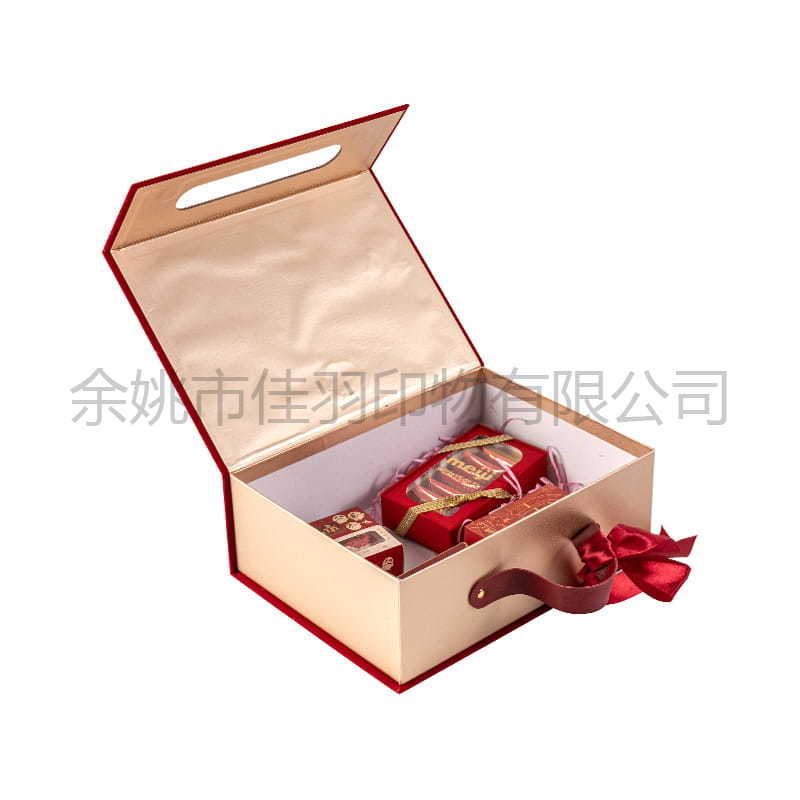
Selecting the best flip gift packaging box for your products requires matching five core factors: box size and structural fit, board material and weight, hinge and closure mechanism quality, surface finish and printing specification, and insert or internal fixturing method. The flip box — a rigid or semi-rigid box with a hinged lid that opens upward — is one of the most impactful packaging formats in gift and premium retail because the reveal moment when the lid opens is a direct extension of the brand experience. Getting the selection right means the box fits the product precisely without excessive void, opens smoothly and stays open during the unboxing experience, feels structurally substantial in the recipient's hands, and carries your brand identity consistently across color, finish, and print quality. Errors in any of these areas undermine the perceived value of both the packaging and the product inside it.
Match Box Dimensions Precisely to the Product
Dimension accuracy is the most fundamental selection criterion for any gift packaging box. A flip box that is too large makes the product look small and poorly presented; one that is too tight risks damaging the product during insertion and removal and makes unboxing frustrating rather than pleasurable.
- Allow 5–10 mm clearance on each side — the internal dimensions of the box should be approximately 5–10 mm larger than the product's dimensions on each side. This clearance accommodates an insert (foam, EVA tray, or card tray) that holds the product securely while allowing comfortable extraction without forcing. Products that fill the box to the edge with no clearance are difficult to remove and frequently show finger marks on the product surface from extraction attempts.
- Height must account for the lid interior — in a flip box, the lid adds height to the total closed box. The internal depth of the base must accommodate the full height of the product plus any insert depth, and the lid must close fully without pressing against the top of the product. Measure the product at its tallest point and add 3–5 mm lid clearance to determine minimum base depth.
- For irregular or multi-piece products — products with irregular shapes (perfume bottles, jewelry, artisan food items) require custom-dimensioned inserts to stabilize the product at specific points. Determine insert dimensions first, then design or select the box to fit the insert's outer dimensions rather than the product directly.
- Request a physical sample before ordering quantity — always verify dimensions against your actual product with a physical sample box before committing to a production run. Dimensional drawings are reliable for standard stock boxes, but for custom sizes, manufacturing tolerances of ±1–2 mm can accumulate in ways that only become apparent when the product is physically placed in the sample box.
Choose the Right Board Material and Thickness
The board material determines the structural rigidity of the box, its weight in hand, its printability, and its cost. For flip gift boxes, three main board categories cover the majority of applications.
Rigid Greyboard (Chipboard) with Wrapped Paper or Fabric
The premium standard for gift packaging. Rigid flip boxes are constructed from 1.5–3.0 mm thick greyboard (compressed waste paper chipboard) wrapped with printed or plain decorative paper, fabric, or specialty material. The greyboard provides exceptional structural rigidity — these boxes do not flex or compress when squeezed — and the wrap layer carries the decorative and brand communication function. Greyboard wrapped boxes have a substantial feel in the hand that communicates quality. They are used for luxury cosmetics, jewelry, watches, premium spirits, high-end electronics accessories, and prestige confectionery. Typical minimum order quantities start at 500–1,000 units for custom sizes.
Folding Boxboard (FBB) or SBS Paperboard
Folding boxboard in 350–600 gsm weight is used for semi-rigid flip boxes that are die-cut and folded flat for shipping, then assembled by the end user or on the packing line. These boxes are more economical than rigid greyboard construction, suitable for mid-range gifting, food and beverage gifting, and cosmetics at accessible price points. They print directly using offset lithography or digital printing, enabling photographic-quality graphics. The trade-off against rigid boxes is less structural weight and a slightly less premium tactile impression.
Corrugated Board (for Protective Gift Shipping Boxes)
When the gift box must also serve as the shipping container — for direct-to-consumer e-commerce gifting — single-wall corrugated board in B-flute or E-flute can be used to construct a flip-lid gift box that provides both presentation quality and drop protection during transit. E-flute corrugated in particular has a fine, tight flute structure that prints well and produces a box with a more refined appearance than standard brown corrugated shipping boxes.
Evaluate the Hinge and Closure Mechanism
The hinge is the mechanical heart of a flip box — it determines how the lid opens, whether it stays open during unboxing, and how many open-close cycles the box can withstand before the hinge degrades. This is an area where quality differences between box suppliers are clearly felt by the recipient.
- Paper hinge (sewn or glued spine) — on rigid greyboard flip boxes, the hinge is typically formed by the connecting paper or fabric wrap on the back of the box that joins the base and lid sections. The quality of this hinge depends on the wrap paper's tear resistance and the quality of the adhesive bond. A well-made paper hinge opens smoothly, stays open at approximately 90–180° without assistance, and withstands hundreds of open-close cycles without cracking. A poorly made paper hinge cracks along the fold line within the first few uses — a common failure point on low-cost rigid boxes.
- Magnetic closure — many premium flip boxes incorporate neodymium magnet pairs embedded in the lid and base edges, providing a satisfying snap closure and keeping the lid securely closed during transit and display. The magnetic closure strength should be sufficient to hold the lid closed when the box is inverted but not so strong that the lid is difficult to open with one hand. Magnets rated at 500–1,000 g pull force are typical for gift box applications.
- Ribbon pull — a ribbon tab attached inside the base of the box and extending to the outside of the box top allows the recipient to open the box with a single pull on the ribbon, which lifts the lid open. This mechanism adds to the ceremonial quality of the unboxing experience and is standard in premium chocolate, tea, and jewelry gift boxes.
- Friction (press-fit) closure — on some folding boxboard flip boxes, the lid stays closed through friction between the lid walls and base walls without a separate locking mechanism. The fit must be snug enough to stay closed reliably but loose enough to open without tearing. This requires precise die-cutting tolerance of ±0.5 mm or better.
Select the Surface Finish That Matches Your Brand Positioning
The surface finish of a flip gift box is the primary carrier of brand visual identity and the most immediately perceived quality signal. The finish selection should align with the price point of the product, the brand's aesthetic identity, and the recipient's expectations for the category.
| Surface Finish |
Visual Effect |
Tactile Quality |
Best Suited For |
| Gloss lamination |
High-shine, vivid color reproduction |
Smooth, slightly slippery |
Cosmetics, food gifts, vibrant graphic designs |
| Matte lamination |
Soft, non-reflective, muted tones |
Velvety, fingerprint-resistant |
Luxury skincare, jewelry, premium spirits, minimalist brands |
| Soft-touch (velvet) lamination |
Matte appearance with deep color depth |
Extremely soft, suede-like texture |
Ultra-premium gifts, watches, perfume, high-end electronics |
| Foil stamping (gold/silver) |
Metallic reflective areas on logo or text |
Smooth, raised metallic feel |
Any premium brand requiring metallic logo highlight |
| Embossing / debossing |
Raised or recessed logo/pattern (no ink) |
Distinct 3D tactile brand mark |
Luxury packaging where tactile brand identity is key |
| Spot UV coating |
Glossy highlight over selected areas on matte base |
Contrast between matte and gloss zones |
Logo and graphic highlight on matte lamination base |
| Kraft paper wrap |
Natural, earthy, artisan aesthetic |
Slightly textured, natural paper feel |
Eco brands, artisan food, natural beauty, sustainable positioning |
Surface finish options for flip gift packaging boxes with visual and tactile characteristics and the brand positioning each suits best.
Design the Internal Insert to Secure and Present the Product
The insert inside the flip box is as important as the box exterior for both product protection and the quality of the unboxing presentation. An uninserted product that shifts freely inside the box communicates carelessness; a well-fitted insert positions the product precisely at the moment the lid opens, creating a considered, curated reveal.
EVA Foam Insert
Closed-cell EVA foam in 5–20 mm thickness is die-cut to the product's shape, creating a custom-fitted recess that holds the product securely and provides shock absorption during transit. EVA foam is available in black, white, and a full range of colors and can be covered with velvet, satin, or linen fabric for enhanced visual quality. It is the standard insert choice for jewelry, watches, cosmetic accessories, and precision instruments where product movement must be eliminated entirely.
Thermoformed Plastic Tray
Vacuum-formed or pressure-formed PET, PP, or PVC trays are molded to the exact product shape and fit inside the box base. Transparent thermoformed trays allow the box base color to show through, while opaque trays are specified in matching or contrasting colors to the box interior. Thermoformed trays are widely used in cosmetics, confectionery gifting, and electronics accessories where multiple items of different shapes must each be held in a defined position.
Card Tray or Paperboard Divider
For simpler gift products — candles, bottles, folded garments, book sets — a scored and folded card tray in 350–600 gsm board provides basic product positioning at lower cost than foam or thermoformed options. Card trays can be printed in brand colors for an integrated appearance when the box lid opens. They are suitable when the product has a flat-bottomed shape that does not require lateral restraint, and when the gift is not subjected to rough handling during shipping.
Factor in Minimum Order Quantities, Lead Times, and Cost Structure
The commercial parameters of flip gift box procurement are as important as the design parameters, particularly for brands managing cash flow, seasonal demand, and product launch timelines.
- Custom rigid boxes: MOQ typically 500–2,000 units — custom-size rigid greyboard flip boxes require tooling (cutting dies, gluing jigs) and setup costs that are amortized across the production run. Below approximately 500 units, unit cost rises steeply because setup costs represent a larger share of total cost. At 1,000–3,000 units, unit cost for a standard custom rigid flip box typically falls in the range of $1.50–$6.00 depending on size, board weight, finish, and insert specification.
- Folding carton flip boxes: MOQ from 250–500 units — die-cut folding boxboard flip boxes have lower setup costs than rigid boxes and are available at lower MOQs. Digital printing options reduce MOQs further to 50–250 units for short runs or product testing, though cost per unit is higher.
- Production lead times: 15–30 days for standard custom orders — factor in sampling time (7–14 days for first samples after artwork approval) plus production time plus shipping from the manufacturer. For seasonal gifting — Christmas, Valentine's Day, Mother's Day — work backward from the required in-warehouse date and allow a minimum of 8–10 weeks from artwork sign-off to delivery for overseas-sourced custom boxes.
- Stock boxes as a low-MOQ alternative — suppliers of stock rigid flip boxes maintain inventory of standard sizes and finishes (black, white, kraft) that can be ordered in quantities as low as 25–50 units with no tooling cost and lead times of 3–7 days. Adding a custom printed belly band, label, or tissue paper to a stock box achieves brand customization at a fraction of the cost and lead time of a fully custom box — a practical option for small-batch products, limited-edition launches, or initial market testing.
Sustainability Considerations in Flip Gift Box Selection
As consumer expectations and regulatory requirements around packaging sustainability increase, the environmental credentials of gift packaging are becoming a selection criterion alongside aesthetics and cost — particularly for brands in natural, organic, and premium lifestyle categories.
- FSC-certified board — select boxes made from FSC (Forest Stewardship Council) certified paperboard or greyboard, which confirms the wood fiber originates from responsibly managed forests. This certification is available for both folding boxboard and rigid greyboard constructions and adds minimal cost premium typically below 5–10%.
- Water-based inks and adhesives — specify water-based printing inks and glues rather than solvent-based formulations, which reduces VOC emissions during manufacturing and makes the box easier to recycle or compost at end of life.
- Avoid plastic lamination where possible — standard gloss and matte lamination films are plastic (BOPP) that prevents the box from being recycled in paper streams. Aqueous (water-based) coatings provide similar visual protection without plastic lamination and maintain recyclability. For brands with sustainability commitments, specifying aqueous coating rather than lamination film is a meaningful step.
- Reuse-oriented design — rigid flip gift boxes with high structural quality are frequently kept and reused by recipients for storage — an inherently sustainable outcome that justifies the higher initial packaging cost. Designing the interior to be useful for secondary storage (clean, unprinted interior, neutral-colored insert) increases the likelihood of reuse and aligns with circular economy principles.
 English
 中文简体
中文简体 Español
 Deutsch
 No.71, Xiafan, Panxiang Village, Yangming Street, Yuyao City, China.
 491791889@qq.comsales@jiayuprint.com
 +86-13186866868
 +86-0574-62587484