Neither paper bowls nor plastic bowls are universally superior — the better choice depends on your specific use case, priorities, and context. Paper bowls are the preferred choice for environmental responsibility, compostability, and single-use food service applications where liquid and heat resistance are not extreme. Plastic bowls outperform paper in durability, moisture resistance, reusability, and cost efficiency for repetitive use — making them better suited for outdoor events, catering operations, and situations where bowls need to hold liquid foods for extended periods without softening.
If you are choosing for a single use at a backyard party or school event, paper is generally the more responsible and increasingly comparable option in terms of performance. If you are choosing for repeated use in a commercial kitchen, food storage, or outdoor setting where spills and rough handling are expected, plastic is more practical. The sections below examine every dimension of this comparison in detail, so you can make the best decision for your specific situation.
Material Composition: What Paper and Plastic Bowls Are Actually Made Of
Understanding what these products are made of is foundational to understanding their performance differences and environmental profiles. Neither "paper" nor "plastic" is a single material — both categories encompass a range of formulations with meaningfully different properties.
Paper Bowl Construction
Paper bowls are made from paperboard — a thick, stiff paper product manufactured primarily from wood pulp. The paperboard provides structural rigidity, but raw paperboard is highly water-absorbent and would quickly become saturated and structurally weak when used with liquid foods. To solve this, most paper bowls receive one or more functional coatings:
- Polyethylene (PE) coating: The most traditional approach — a thin layer of low-density polyethylene is applied to the inner surface (and sometimes the outer surface) of the paperboard. This creates a moisture barrier. However, PE-coated paper bowls are significantly harder to recycle or compost because the plastic must be separated from the paper fiber.
- PLA (polylactic acid) coating: A plant-derived bioplastic coating derived from corn starch or sugarcane. PLA-coated paper bowls are marketed as compostable and are certified compostable under industrial composting conditions (ASTM D6400 or EN 13432). However, PLA requires temperatures above 58°C sustained for several weeks to break down — conditions found in industrial composting facilities, not in backyard compost bins.
- Aqueous (water-based) coatings: Newer formulations use water-based barrier coatings derived from plant-based waxes or modified starches. These offer genuine compostability in a wider range of conditions and are increasingly used by premium eco-focused manufacturers.
- Uncoated natural fiber bowls: Some products use molded pulp (sugarcane bagasse, bamboo, wheat straw) without any coating, relying on the natural density of the compressed fiber for modest liquid resistance. These are the most genuinely compostable option but have the lowest moisture tolerance.
Plastic Bowl Construction
Plastic bowls are manufactured from a variety of polymer types, each with distinct performance characteristics:
- Polypropylene (PP, Resin Code #5): The most common plastic for reusable food bowls. PP is food-safe, dishwasher-safe, microwave-safe (without lid in most cases), and resistant to most food acids and oils. It has a melting point around 160–170°C, making it suitable for hot food service.
- Polystyrene (PS, Resin Code #6): Used primarily for disposable single-use plastic bowls. Lightweight and inexpensive, but brittle at low temperatures, not microwave-safe, and particularly problematic environmentally due to its tendency to fragment into microplastics.
- High-Density Polyethylene (HDPE, Resin Code #2): Used for some food-safe reusable bowls and containers. HDPE is highly chemical resistant and one of the more recyclable plastics, with established collection infrastructure in most developed countries.
- Melamine: A thermosetting plastic used for durable, dishwasher-safe tableware. Melamine bowls are hard, scratch-resistant, and available in a wide range of designs. However, they should not be used in microwaves and can release melamine compounds at high temperatures, particularly when scratched.
Head-to-Head Comparison Across Key Performance Categories
The table below provides a structured side-by-side comparison of paper and plastic bowls across the dimensions that matter most to consumers and businesses making purchasing decisions.
Comparison of paper bowls and plastic bowls across key performance and sustainability criteria
| Category |
Paper Bowl |
Plastic Bowl (Disposable) |
Plastic Bowl (Reusable) |
| Liquid resistance |
Moderate (coated); low (uncoated) |
Excellent |
Excellent |
| Heat tolerance |
Moderate — softens with very hot liquids |
Low — PS deforms/melts; not microwave-safe |
High (PP) — microwave-safe |
| Durability / single use |
Single use; soggy if overloaded |
Single use; holds shape well |
Multi-year lifespan |
| Biodegradability |
Good (uncoated / plant-coated) |
Very poor — hundreds of years |
Very poor — hundreds of years |
| Recyclability |
Limited (coating complicates recycling) |
Limited in practice (PS rarely recycled) |
Good (PP, HDPE) — widely recyclable |
| Microwave safety |
Generally yes (uncoated/PLA) |
No (PS melts/leaches) |
Yes (PP) |
| Cost per use |
Low (single use); eco versions cost more |
Lowest single-use cost |
Lowest long-term cost |
| Weight / portability |
Very light |
Very light |
Light to moderate |
| Chemical leaching risk |
Low (paper itself); varies by coating |
Moderate (PS leaches styrene when heated) |
Low (PP rated food-safe) |
| Aesthetic / printability |
Excellent — easy to print on |
Moderate |
Good — wide color range |
Environmental Impact: The Full Picture Beyond "Paper Is Better"
The environmental comparison between paper and plastic bowls is more nuanced than it might appear. The common assumption that paper is automatically better than plastic is not always accurate when the full lifecycle is considered — but for the most common disposal scenarios, paper does come out ahead.
Carbon Footprint and Production Energy
Manufacturing a paper bowl requires more raw material and energy than manufacturing a comparable plastic bowl. Lifecycle assessment (LCA) studies consistently show that producing paper cups and bowls generates higher greenhouse gas emissions per unit during manufacturing than equivalent plastic items, largely because of the energy-intensive pulping, bleaching, and coating processes involved in paperboard production.
A study by the Finnish Environment Institute found that a paper cup requires approximately 10 grams of wood pulp, significant amounts of water (typically 200 to 300 liters per kilogram of paper produced), and chemical processing to manufacture, before any coating is applied. The plastic equivalent requires less raw material by weight and less water in production.
However, the carbon footprint calculation fundamentally changes when end-of-life is considered. Plastic items that enter landfill persist for 400 to 1,000 years without meaningful degradation. Those that enter the ocean or natural environment break down into microplastics — particles less than 5 mm in diameter — that contaminate ecosystems, enter the food chain, and have been detected in human blood, breast milk, and lung tissue. Paper, even PE-coated paper, degrades meaningfully within years under landfill conditions, and uncoated or plant-fiber paper items can break down within months.
The Recycling Reality for Both Materials
Neither paper bowls nor plastic disposable bowls are effectively recycled in most municipal waste streams:
- PE-coated paper bowls cannot be processed in standard paper recycling facilities because the plastic coating prevents the paper fibers from separating cleanly in the pulping process. Most coated paper bowls end up in landfill even when placed in the recycling bin.
- Polystyrene (PS) disposable bowls are accepted by very few municipal recycling programs globally — the US Environmental Protection Agency estimates that less than 1% of polystyrene is recycled in the United States. Most goes to landfill or, worse, escapes as litter.
- Molded pulp and uncoated paper fiber bowls can be composted at home or in industrial composting facilities. This represents a genuinely closed-loop end-of-life pathway unavailable to any plastic bowl.
Ocean Pollution and Wildlife Impact
The ocean pollution dimension heavily favors paper over plastic. An estimated 8 million metric tons of plastic enter the world's oceans every year. Single-use plastic food serviceware — including bowls, cups, and containers — is among the most frequently found items in coastal cleanups worldwide. Paper items, even those not properly disposed of, degrade relatively quickly in marine environments and do not accumulate as persistent pollutants the way plastic does.
Plastic pollution in marine environments has been documented to affect more than 800 species of marine wildlife through ingestion, entanglement, and habitat degradation. The long-term ecological cost of this pollution is a major factor in why regulatory trends worldwide are moving toward restricting single-use plastics rather than single-use paper items.
Food Safety: Chemical Concerns in Paper and Plastic Bowls
Food safety is a legitimate concern for both material types, particularly when bowls are used with hot foods or acidic ingredients that can accelerate chemical migration from bowl to food.
PFAS in Paper Foodservice Products
One of the most significant food safety concerns with paper bowls in recent years has been the discovery of per- and polyfluoroalkyl substances (PFAS) — a class of over 12,000 synthetic chemicals — in some paper foodservice products. PFAS were historically added to paper coatings to provide grease and moisture resistance, and they are extraordinarily persistent in both the environment and the human body, earning them the nickname "forever chemicals."
Studies by consumer advocacy organizations and regulatory bodies have detected PFAS in paper bowls, plates, and packaging from numerous manufacturers. However, the industry is actively transitioning away from PFAS-containing coatings following regulatory pressure: the US states of California, New York, and Maine have enacted laws restricting PFAS in food packaging, and the European Union has proposed restrictions under REACH. When purchasing paper bowls, look for explicit "PFAS-free" labeling to avoid this concern.
Plastic Leaching: BPA, Styrene, and Other Concerns
Plastic bowls present their own food safety considerations:
- Polystyrene (PS): Styrene — the monomer from which polystyrene is made — is classified as a possible human carcinogen by the International Agency for Research on Cancer. Styrene migration from PS bowls increases with heat and with acidic foods like tomato sauce. The US National Toxicology Program listed styrene as "reasonably anticipated to be a human carcinogen" in its 15th Report on Carcinogens (2021).
- Bisphenol A (BPA): While BPA is primarily associated with polycarbonate plastics and epoxy resins rather than PP or PS, it remains a concern in some plastic food containers. BPA is an endocrine disruptor — a chemical that mimics hormones in the body. Many manufacturers now produce "BPA-free" plastics, though some alternative bisphenols (BPS, BPF) used as substitutes are now also under regulatory scrutiny.
- Polypropylene (PP) microplastics: A 2020 study published in the journal Environmental Science and Technology found that microwaving food in plastic PP containers released up to 4.22 million microplastic particles per square centimeter into the food. The long-term health effects of ingested microplastics are still being studied, but current evidence raises legitimate concerns.
The Safest Options in Each Category
For minimizing chemical exposure concerns:
- Safest paper option: Uncoated molded pulp (sugarcane bagasse or bamboo) or PFAS-free plant-wax-coated paper bowls. Avoid PE-coated paper bowls for hot or acidic foods.
- Safest plastic option: Food-grade polypropylene (PP) reusable bowls from reputable manufacturers, used within their temperature ratings and replaced when scratched or cloudy. Avoid polystyrene (PS) for any hot food application.
Performance With Different Food Types
The suitability of paper versus plastic bowls varies significantly depending on what food is being served. Understanding these differences helps select the appropriate bowl for each food application.
Soups, Broths, and Liquid-Heavy Foods
This is where the performance gap between paper and plastic is most pronounced. A coated paper bowl can hold soup adequately for 15 to 20 minutes before moisture begins to penetrate the coating and soften the paperboard structure. Uncoated paper bowls begin to weaken almost immediately with hot liquid. Plastic bowls — whether disposable PS or reusable PP — hold liquids indefinitely without structural degradation.
For hot soup service at an event where bowls will be held by guests for 20 or more minutes, plastic is the more reliable choice. For quick-service soup applications where bowls are consumed within a few minutes, quality coated paper bowls perform adequately.
Salads and Dry Foods
For dry and semi-dry foods — salads, chips, popcorn, dry cereals — paper bowls perform excellently. The moisture levels involved are well within the tolerance of coated and even uncoated paper. Paper bowls used for salads dressed with oil-based dressings hold up well for typical meal durations. This is one of the best applications for uncoated fiber bowls, which are genuinely compostable and perform perfectly for this food category.
Greasy and Oily Foods
Oil and grease penetration is a significant weakness of uncoated paper bowls. Fried foods — french fries, fried chicken pieces, oily dips — will cause grease to seep through an uncoated paper bowl within minutes, creating visible staining and potential structural weakening. PE-coated and PFAS-free grease-resistant coated paper bowls handle oily foods much better. Plastic bowls are completely impervious to oil and grease and can be washed clean after use.
Frozen Desserts and Cold Foods
Both paper and plastic bowls perform reasonably well with cold foods. Condensation on cold bowls is managed better by plastic (which does not absorb moisture) than by paper (which can become damp on the outside). For ice cream, frozen yogurt, and similar desserts, plastic is preferable for durability, but paper is widely used in commercial ice cream shops precisely because coated paper handles cold temperatures without cracking or becoming brittle — a problem that affects some plastics at very low temperatures.
Microwaved Foods
Uncoated and PLA-coated paper bowls are generally microwave-safe for short durations (1 to 2 minutes). PE-coated paper bowls should not be microwaved as the PE coating can begin to soften or leach. Polystyrene plastic bowls are not microwave-safe and can warp or release styrene when heated. Polypropylene reusable bowls are the best option for microwaving, rated safe for typical microwave heating durations, though — as noted above — microplastic release is a concern with any plastic in high-heat microwave conditions.
Cost Analysis: Which Is More Economical?
The cost comparison between paper and plastic bowls depends entirely on whether they are being used once or multiple times. The economics are completely different for single-use versus reusable scenarios.
Single-Use Cost Comparison
For single-use applications, disposable plastic bowls (polystyrene) are typically the cheapest option by unit cost. Standard-size disposable plastic bowls can be purchased for as little as $0.05 to $0.10 per unit in bulk quantities. Standard coated paper bowls are typically slightly more expensive, around $0.08 to $0.15 per unit in bulk. Eco-certified paper bowls — PLA-coated or molded sugarcane bagasse — cost significantly more, typically $0.20 to $0.50 per unit, reflecting the higher material and manufacturing costs.
For budget-focused high-volume events where cost per unit is the primary driver, disposable plastic currently holds a price advantage. For events where sustainability credentials are important (corporate events, green-certified catering), the premium for eco paper bowls is generally accepted as a cost of doing business responsibly.
Reusable Plastic Bowls: The Long-Term Value Leader
When reusable plastic bowls (polypropylene) are factored into the comparison, they become by far the most economical option over any significant time horizon. A quality reusable PP bowl costs approximately $1 to $5 per unit but can withstand hundreds to thousands of dishwasher cycles over a service life of 5 to 10 years. The per-use cost quickly becomes fractions of a cent, far below any disposable option.
The break-even point — where a reusable plastic bowl has paid for itself compared to repeatedly buying paper disposables — is typically reached within 20 to 50 uses. For households, schools, and commercial kitchens that use bowls daily, this payback occurs within weeks.
Hidden Costs: Waste Disposal and Environmental Fees
Increasingly, the cost comparison must include regulatory and disposal costs. Extended Producer Responsibility (EPR) schemes — which charge manufacturers and distributors for the cost of collecting and processing their packaging — are being implemented across Europe, Canada, and several US states. These schemes are typically more burdensome for plastic packaging than for paper packaging, meaning the apparent unit-cost advantage of plastic may erode further as regulatory frameworks mature. Some jurisdictions already levy explicit plastic tax surcharges on single-use plastic foodservice items.
Regulatory and Legal Landscape: The Trend Is Away from Single-Use Plastic
The global regulatory environment is moving clearly in the direction of restricting single-use plastics, including disposable plastic bowls and food containers. Understanding these trends is important for businesses making long-term purchasing or product decisions.
European Union Single-Use Plastics Directive
The EU's Single-Use Plastics (SUP) Directive, which came into force in 2021, banned the sale of expanded polystyrene food and beverage containers across all EU member states, among other single-use plastic items. This directly eliminates the most common type of disposable plastic bowl from the European market. The directive also requires plastic food containers to contain at least 25% recycled content by 2025 and imposes extended producer responsibility requirements that increase the effective cost of plastic packaging.
United States and State-Level Actions
In the United States, there is no federal ban on single-use plastic foodservice items, but state and municipal-level action has been significant. California, New York, Washington, and Maryland are among the states that have enacted restrictions on polystyrene food containers. Over 100 US cities and counties have enacted local bans on polystyrene foodservice items. The trend is clearly toward increasing restriction of single-use plastic foodservice packaging at the legislative level.
Implications for Purchasing Decisions
For businesses that procure foodservice disposables, the regulatory trajectory strongly suggests that building dependence on polystyrene or other non-compostable single-use plastic bowls creates future supply and compliance risk. Transitioning to paper, molded fiber, or genuinely recyclable plastic options now, before mandates require it, avoids potential last-minute supply chain disruptions and reputational costs.
The Best Choice for Each Specific Use Case
Rather than declaring a single universal winner, the most useful guidance maps the best bowl choice to specific use scenarios. The table below provides clear recommendations based on common use cases.
Recommended bowl material by use case, based on performance, safety, and environmental considerations
| Use Case |
Recommended Choice |
Key Reason |
| Backyard party / casual gathering (dry or lightly moist foods) |
Paper (molded fiber or coated) |
Compostable; adequate performance; environmentally responsible |
| Hot soup or ramen service |
Reusable plastic (PP) or heavy coated paper |
Liquid and heat resistance; structural integrity for extended holding |
| School or office daily use |
Reusable plastic (PP) |
Lowest long-term cost; dishwasher-safe; microwave-safe |
| Eco-certified event or catering |
Certified compostable paper (bagasse/bamboo) |
Genuine end-of-life composting pathway; sustainability credentials |
| Outdoor camping or hiking |
Reusable plastic (PP) |
Durability, moisture resistance, and reusability; no litter risk |
| Children's birthday party |
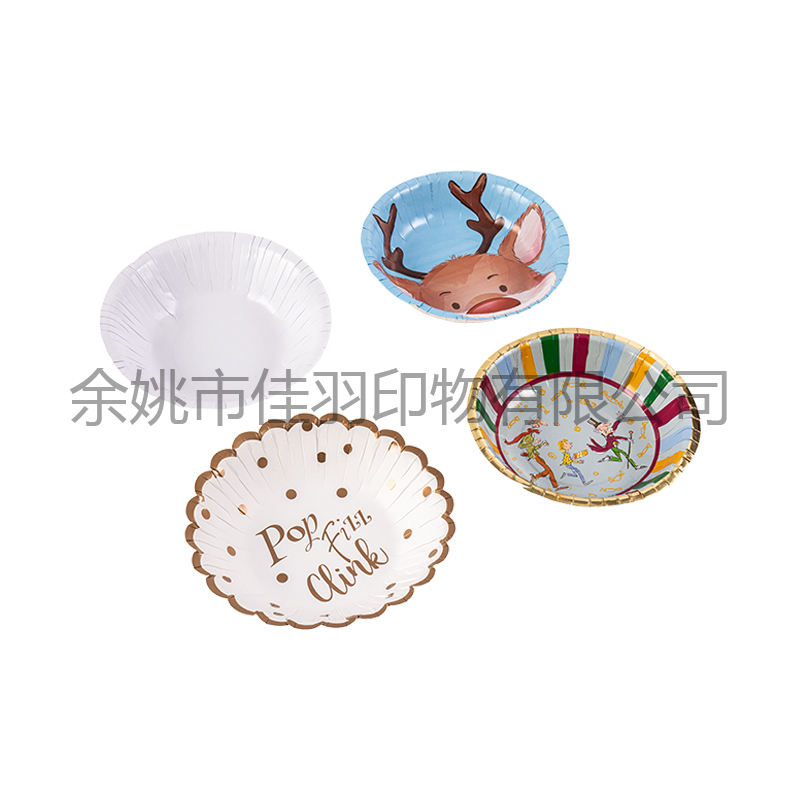
Paper (coated, printable) |
Easily printed with fun designs; safer drop/shatter profile |
| Ice cream or frozen dessert service |
Paper (coated) |
Industry standard; handles cold without cracking; good moisture resistance |
| Microwaving leftovers |
Reusable PP plastic or ceramic |
Safe for microwave use; no chemical concerns at heat |
| Food truck or street food stall |
Molded sugarcane bagasse paper |
Grease-resistant; compostable; good brand sustainability image |
The Rise of Alternative Materials: Sugarcane, Bamboo, and Beyond
The paper vs. plastic debate is increasingly being disrupted by a third category: bowls made from alternative natural fibers that offer improved sustainability credentials over both traditional paper and plastic.
Sugarcane Bagasse Bowls
Bagasse is the fibrous material remaining after sugarcane stalks have been pressed to extract juice. This agricultural byproduct — which would otherwise be burned or landfilled — can be molded under heat and pressure into sturdy, lightweight bowls without additional chemical treatment. Bagasse bowls are:
- Naturally grease and moisture resistant — more so than wood pulp paper, without requiring a plastic coating
- Microwave-safe and freezer-safe within typical food temperature ranges
- Home and industrially compostable — a genuine end-of-life advantage over all plastic and most coated paper options
- Made from a waste material — they do not require dedicated land or trees for fiber production, representing a genuinely circular use of an existing byproduct
Bamboo Fiber Bowls
Bamboo is one of the fastest-growing plants on Earth, capable of reaching harvestable size within 3 to 5 years compared to 20 to 80 years for typical timber trees. Bamboo fiber bowls share many properties with bagasse — they are sturdy, compostable, and require no plastic coating for reasonable moisture resistance. They are increasingly popular as a premium sustainable tableware option in restaurants, cafes, and high-end catering.
Palm Leaf and Other Agricultural Byproduct Bowls
Bowls pressed from fallen palm leaves, wheat straw pulp, and rice husk represent additional natural-material alternatives that convert agricultural waste into functional foodservice products. These materials are fully compostable and require no trees to be felled or plastic to be added. The category is growing rapidly as consumer awareness of sustainable alternatives increases and prices fall with scale of production.
Practical Tips for Making the Right Choice
Drawing together the analysis above, the following practical guidelines help consumers and businesses make informed, confident choices between paper and plastic bowls in real-world situations.
For Households
- For everyday meals, invest in good quality reusable PP or melamine bowls and skip disposables entirely. The long-term cost, environmental impact, and convenience of washing versus replacing are all better with reusables.
- When disposables are genuinely needed (large parties, travel), choose PFAS-free coated paper or uncoated molded fiber over plastic — compostable options have the lowest environmental footprint at end of life.
- Avoid polystyrene bowls for any hot food application — both for health reasons (styrene migration) and environmental reasons.
For Food Service Businesses
- Audit your current bowl specifications against the regulatory environment in your jurisdiction. If polystyrene is still in use, begin transitioning now ahead of likely legislative restrictions.
- Consider whether a switch to reusable plastic with commercial washing can reduce both cost and waste compared to single-use — many cafeterias and corporate dining operations have found this economically favorable at sufficient volume.
- For genuinely single-use applications (takeaway, delivery, grab-and-go), certified compostable bagasse bowls offer the best combination of performance, food safety, and sustainability credentials of any currently available material.
- Verify sustainability claims with third-party certification (ASTM D6400, EN 13432, or equivalent) rather than relying on manufacturer labeling alone. "Biodegradable" is not the same as "compostable" and both terms are used loosely in marketing materials.
What to Look for on Labels
- For paper bowls: Look for "PFAS-free," "BPI certified compostable" (Biodegradable Products Institute), "ASTM D6400," or "EN 13432" for genuine compostability assurance.
- For plastic bowls: Look for resin identification code #5 (PP) for food-safe, dishwasher-safe, and microwave-safe properties. Avoid #6 (PS) for any food-contact use involving heat or acid.
- For any bowl: FDA food contact approval is the minimum safety standard for US consumers. EU food contact material compliance (EC 1935/2004) is the equivalent standard for European markets.
Final Verdict: Which Is Better Overall?
Taking all factors into account — environmental impact, food safety, performance, cost, and regulatory trajectory — the comparative verdict breaks down as follows:
- For single-use disposable needs, paper (especially molded fiber or certified compostable) is the better choice in the vast majority of situations. Its biodegradability, lower long-term environmental persistence, and alignment with regulatory direction outweigh its manufacturing energy cost disadvantage in most real-world waste scenarios.
- For reusable applications, food-grade polypropylene plastic bowls are the better overall choice — combining excellent functional performance, food safety, dishwasher durability, and long-term cost efficiency in a way that no paper product can match.
- Single-use polystyrene plastic bowls are the worst option across virtually every meaningful dimension — they are the most hazardous chemically, the most environmentally persistent, the most likely to be banned, and not meaningfully better in function than well-made paper alternatives.
The clearest path forward for most consumers and businesses is: use reusable plastic (PP) wherever possible, and choose certified compostable paper or natural fiber for genuinely single-use needs. This approach optimizes across all relevant dimensions — environmental responsibility, food safety, performance, and long-term cost — better than any single-material strategy.
 English
 中文简体
中文简体 Español
 Deutsch
 No.71, Xiafan, Panxiang Village, Yangming Street, Yuyao City, China.
 491791889@qq.comsales@jiayuprint.com
 +86-13186866868
 +86-0574-62587484