If you have a spec sheet that says 160 gsm and a US printer asking for pounds, do not answer with one number. 160 gsm converts to about 108 lb text, 59 lb cover, or 43 lb bond. The right figure depends on the paper grade because the US pound system uses different basis sheet sizes. Get the grade wrong, and a paper cup, plate, or packaging box can arrive with the wrong stiffness, print behavior, or food-contact coating.
What 160 gsm to lbs means in practice
GSM stands for grams per square meter. It is a direct metric measurement: a 160 gsm sheet weighs 160 grams per square meter. LBS, often written as lb or #, is a US basis weight. It describes the weight of 500 sheets in a specific untrimmed parent sheet size. Text paper uses a 25 x 38 inch basis, cover paper uses 20 x 26 inch, and bond paper uses 17 x 22 inch. That is why 160 gsm does not have a single pound equivalent.
For a quick sanity check, remember that text paper is lighter per pound because its basis sheet is larger. Cover paper uses a smaller basis sheet, so a single pound of cover stock covers less area and produces a lower pound number for the same gsm.
For everyday buying, the practical answer is: 160 gsm is about 108 lb text, 59 lb cover, or 43 lb bond. If your supplier only says "160 gsm to lbs," ask one more question: which grade? The answer changes the price, caliper, foldability, and print result.
160 gsm to lbs conversion table
Approximate pound equivalents for 160 gsm across common paper grades.
| Paper grade |
Basis sheet size |
Conversion formula |
160 gsm equals |
Typical use |
| Text / Book |
25 x 38 in |
lb = gsm / 1.48 |
108 lb text |
Books, manuals, flyers |
| Cover / Cardstock |
20 x 26 in |
lb = gsm / 2.708 |
59 lb cover |
Cards, boxes, covers |
| Bond / Writing |
17 x 22 in |
lb = gsm / 3.75 |
43 lb bond |
Letterhead, forms |
| Index |
25.5 x 30.5 in |
lb = gsm / 1.81 |
88 lb index |
Tabs, records |
| Bristol |
22.5 x 28.5 in |
lb = gsm / 2.2 |
73 lb bristol |
Postcards, covers |
| Tag |
24 x 36 in |
lb = gsm / 1.5 |
107 lb tag |
Tags, tickets |
If your supplier uses a different basis size, the number will shift. Always confirm the standard behind the pound value. A "100 lb" sheet can be 100 lb text, 100 lb cover, or 100 lb index, and each one has a different gsm.
Why the same 160 gsm feels different
Two sheets can both be labeled 160 gsm and still feel completely different in the hand. Caliper, or thickness, is not the same as weight. An uncoated offset sheet at 160 gsm may feel thicker and more absorbent than a glossy coated sheet at the same weight. Coating, calendering, pulp blend, and bulk all change the final result.
For packaging and foodservice products, this matters. A 160 gsm sheet used for a paper cup sleeve must fold cleanly and hold ink. A 160 gsm sheet used for a paper plate may need a barrier coating for grease or moisture. If you only compare grams per square meter, you can miss the properties that make the product work on the line and on the table.
Buyers should ask for a caliper target and a folding test. A paper that passes a 160 gsm weight check can still crack on a tight score or feel flimsy after conversion.
Where 160 gsm paper fits in foodservice and packaging
160 gsm is a middle-weight paper. It is often seen in cup sleeves, paper bags, brochures, paper cards, and light packaging. It can also appear in foodservice items when the item is not expected to carry heavy loads. For hot coffee cups, heavy paper plates, and deep bowls, manufacturers usually move to higher weights or multi-layer constructions to gain stiffness and heat resistance.
Food-contact paper also needs the right coating. Uncoated paper, PLA-coated paper, and PP-coated paper behave differently with grease, water, and heat. A 160 gsm base sheet with a poor barrier can fail before the weight becomes an issue. For sustainable foodservice programs, buyers should specify both the base weight and the coating, then verify with samples. Sustainable paper cups and bowls depend on that combination, not on gsm alone.
For example, a 12 oz coffee paper cup with a top diameter of 9 cm, bottom of 6 cm, and height of 11.2 cm is a real production format. The paper weight and coating must support the cup's seam, rim, and sidewall. A 160 gsm sheet may work for some sleeves or secondary components, but the cup body often needs a different specification.
How to convert 160 gsm to lbs correctly
Start by identifying the paper grade. Do not use the text formula for cover stock. The difference is large: 160 gsm is 108 lb text but only 59 lb cover. If you order 108 lb cover by mistake, you will receive a much heavier sheet than expected. If you order 59 lb text, you will receive a much lighter sheet than expected.
- Ask the mill or supplier for the grade name: text, cover, bond, index, bristol, or tag.
- Confirm the basis sheet size used in the quote.
- Apply the correct formula or check a trusted conversion table.
- Request caliper in microns or points, not just gsm.
- Test folding, scoring, printing, and barrier performance on a sample.
As a worked example, 160 divided by 1.48 equals about 108.1, so the text equivalent rounds to 108 lb. The same 160 divided by 2.708 equals about 59.1, so the cover equivalent rounds to 59 lb. The math is simple, but the basis size choice is not optional.
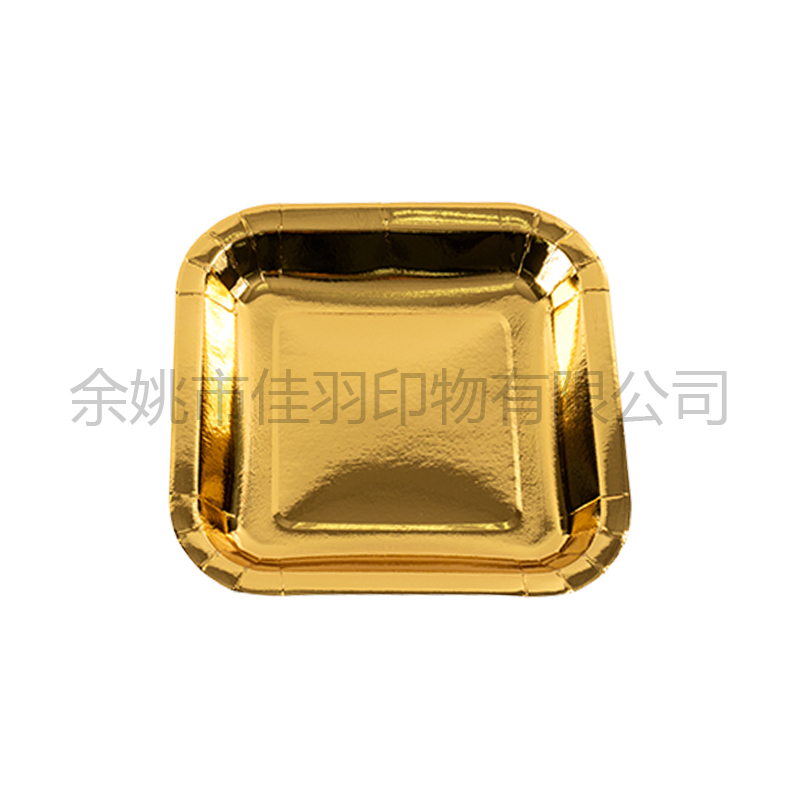
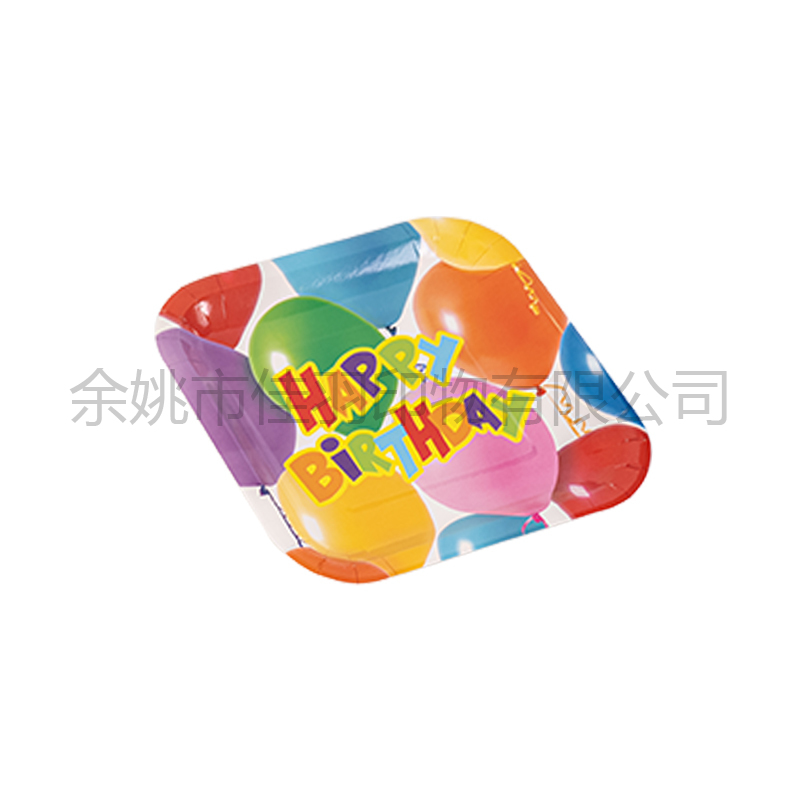 Customizable 10 Inch Square Paper Tray and Plate Φ23.4A customizable gold 10-inch square paper tray/plate, Φ23.4, suited for main dishes, snacks, and desserts; noted for formed-tray stiffness.View Product →
This is especially important for trays and plates. A 10 inch square paper tray with a 23.4 cm size needs consistent stiffness across the formed shape. If the paper is too light, the rim may flex. If it is too heavy, scoring can crack. The pound equivalent is only a starting point for the technical conversation.
Choosing between 160 gsm and nearby weights
In many projects, 160 gsm sits between lighter 140 gsm and heavier 180 gsm or 200 gsm stock. The choice depends on the load, the printing method, and the feel you want.
- 140 gsm: light brochures, inserts, and low-cost flyers.
- 160 gsm: medium brochures, paper cards, cup sleeves, and light packaging.
- 180 gsm: stiffer cards, menus, and retail packaging.
- 200 gsm and above: heavy covers, boxes, and foodservice items that need rigidity.
If a product must hold food, stack without bending, or survive a hot drink, do not choose by weight alone. Choose by the finished performance. A 6.5 inch or 7 inch lace paper bowl, for instance, needs a base paper and coating that resist moisture and maintain shape. The visual lace edge is decorative, but the paper structure does the work.
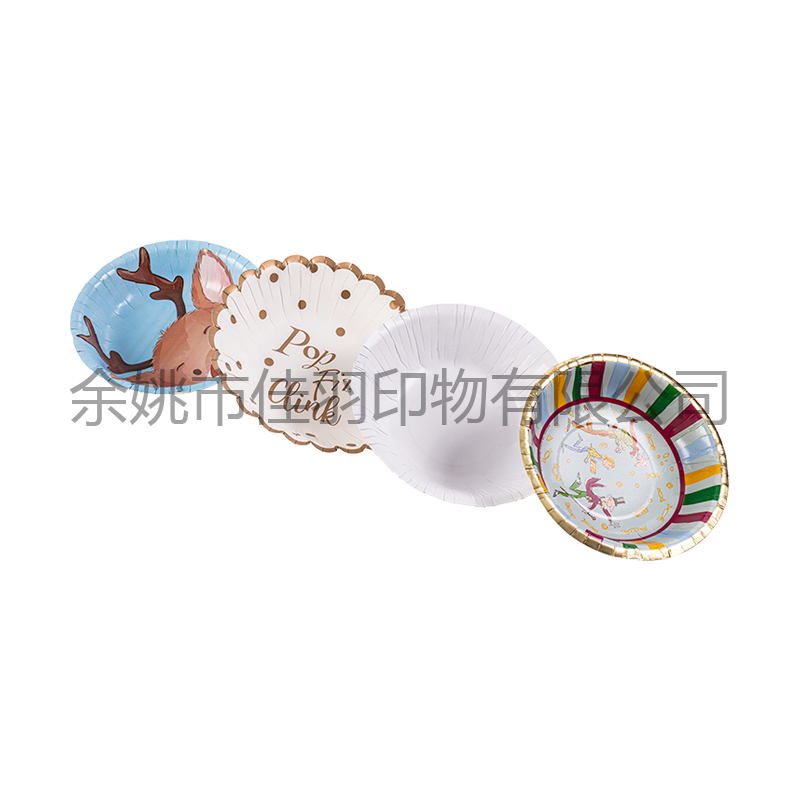 6.5 Inch and 7 Inch Paper Bowls with Lace Option6.5-inch Φ16.7 and 7-inch Φ17 bowls, plus lace style, for snacks, desserts, soups, and commercial use; the series focuses on shape retention and degradable materials.View Product →
Practical checklist for buyers
Use this checklist when a project mixes metric and US paper weights.
- Write the specification as "160 gsm, text grade" or "160 gsm, cover grade," never as "160 gsm" alone.
- Add the target caliper and stiffness range.
- State the printing process: offset, flexo, digital, or gravure.
- Confirm food-contact compliance and coating type for cups, plates, and bowls.
- Ask for a sample of the exact grade before placing a bulk order.
- Test scoring, folding, stacking, and moisture resistance in the actual use case.
For foodservice, add a barrier test. Water, grease, and heat can change how a 160 gsm sheet performs, even when the weight is correct. A coated sample may pass where an uncoated sample fails.
These steps prevent a common and expensive mistake: converting 160 gsm with the wrong basis weight and ordering a paper that is far from the intended thickness.
FAQ: 160 gsm to lbs
What is 160 gsm in lbs?
160 gsm is approximately 108 lb text, 59 lb cover, 43 lb bond, 88 lb index, 73 lb bristol, or 107 lb tag. The correct value depends on the paper grade.
Is 160 gsm paper thick?
It is a medium-weight paper.Thickness, or caliper, depends on the pulp, coating, and finish. A 160 gsm uncoated sheet can feel thicker than a 160 gsm coated sheet.
Can 160 gsm paper be used for paper cups?
It can be used for some cup sleeves or secondary parts. The cup body usually needs a heavier or more rigid paper, especially for hot drinks and larger sizes.
Why do online charts give different numbers for 160 gsm?
Many charts do not state whether they are converting text, cover, bond, index, bristol, or tag paper. Without the grade, the pound number is incomplete.
When someone asks for 160 gsm to lbs, the best reply is not a single number. Reply with the grade and the equivalent: 108 lb text, 59 lb cover, or 43 lb bond. Then confirm caliper, coating, and the finished product. That is how a simple conversion becomes a reliable paper specification for cups, plates, bowls, and packaging.
 English
 中文简体
中文简体 Español
 Deutsch
 No.71, Xiafan, Panxiang Village, Yangming Street, Yuyao City, China.
 491791889@qq.comsales@jiayuprint.com
 +86-13186866868
 +86-0574-62587484