270 gsm is about 100 lb cover. That one line answers most searches, because 270 gsm stock is nearly always a cover-weight or board-weight sheet: folding cartons, box lids, business cards, hang tags and printed packaging. If a North American supplier asks how you want it, say 100 lb cover and you will get the sheet you expect.
The catch is that the pound figure is not fixed at 270 gsm. A pound value only means something when the grade is named, because every grade is weighed on its own base sheet size. In text grades, 270 gsm reads about 183 lb. In index, about 149 lb. In bond, about 72 lb. Same paper, three different labels.
Why 270 gsm Has More Than One Pound Value
GSM means grams per square meter. One square meter of 270 gsm paper weighs 270 grams, roughly 0.6 lb. It is a direct measurement of the sheet itself, which is why metric weights travel so well across borders and why most mills quote them by default.
US pound weights work indirectly. The number describes the weight of 500 sheets cut to one defined base size, and that base size belongs to the grade:
- Bond and writing: 17 x 22 in
- Text and book: 25 x 38 in
- Cover: 20 x 26 in
- Index: 25.5 x 30.5 in
- Bristol: 22.5 x 28.5 in
- Tag and news: 24 x 36 in
A 20 x 26 in sheet is far smaller than a 25 x 38 in sheet, so 500 cover sheets carry much less total area than 500 text sheets. That is the entire reason the same 270 gram sheet shows up as 100 lb in one grade and 183 lb in another.
A quick check on the arithmetic
Take 500 sheets of 20 x 26 in at 270 gsm. Each sheet covers about 0.335 square meters and weighs roughly 90.6 grams. Multiply by 500 and the ream comes to 45.3 kg, or just under 100 lb. That is exactly where the 100 lb cover label comes from.
270 gsm to lbs by Paper Grade
Use the factor in the third column for any gsm value in that grade. The final column shows what it gives at 270 gsm.
Conversion factors by grade. Multiply any gsm value by the factor to get pounds per ream at that grade base size.
| Grade |
Base size, 500 sheets |
Multiply gsm by |
270 gsm equals |
| Bond and writing |
17 x 22 in |
0.266 |
72 lb bond |
| Text and book |
25 x 38 in |
0.676 |
183 lb text |
| Cover |
20 x 26 in |
0.370 |
100 lb cover |
| Index |
25.5 x 30.5 in |
0.553 |
149 lb index |
| Bristol |
22.5 x 28.5 in |
0.456 |
123 lb bristol |
| Tag and news |
24 x 36 in |
0.614 |
166 lb tag |
If you would rather carry one formula than a chart, this one covers every grade:
Pounds per ream = gsm x base area in square inches x 0.000711
For cover stock that reads 270 x 520 x 0.000711, which comes to 99.8 lb. Round it to 100.
What 270 gsm Looks and Feels Like
Weight is not thickness. Two 270 gsm sheets from different mills can differ in caliper by 20 percent or more, because coating, fiber blend and bulk all change how thick the sheet finishes.
- Coated art card at 270 gsm usually measures about 0.26 to 0.28 mm, close to 10 pt.
- Uncoated or vellum board at the same gsm is bulkier, often 0.30 to 0.36 mm.
- A letter size sheet weighs about 16 grams, a little over half an ounce.
- 500 letter size sheets weigh roughly 8 kg, about 18 lb, which has nothing to do with the 100 lb label.
That last point trips people up constantly. The pound label is a trade name for a ream of a defined base sheet, not the weight of the paper sitting in your hand.
270 gsm Next to Other Common Board Weights
Most packaging projects land between 200 and 350 gsm. This table puts 270 gsm in context with its nearest neighbours.
Approximate cover equivalents and calipers for coated board. Caliper shifts with mill, finish and moisture content.
| Grammage |
Approx. lb cover |
Typical caliper |
Common use |
| 200 gsm |
74 lb |
0.19 to 0.21 mm |
Inserts, inner cards, light sleeves |
| 250 gsm |
92 lb |
0.24 to 0.26 mm |
Postcards, light cartons |
| 270 gsm |
100 lb |
0.26 to 0.28 mm |
Box lids, hang tags, business cards |
| 300 gsm |
111 lb |
0.29 to 0.32 mm |
Retail cartons, blister cards |
| 350 gsm |
129 lb |
0.34 to 0.38 mm |
Heavy covers, rigid-look gift boxes |
Converting Pounds Back to GSM
Divide by the factor, or use these reverse multipliers for a fast estimate:
- Bond: lb x 3.76
- Text: lb x 1.48
- Cover: lb x 2.70
- Index: lb x 1.81
- Bristol: lb x 2.19
- Tag: lb x 1.63
Working examples: 80 lb cover is 216 gsm, 100 lb cover is 270 gsm, and 110 lb cover is 297 gsm. On the text side, 80 lb text is 118 gsm and 100 lb text is 148 gsm. Notice how far apart 100 lb text and 100 lb cover really are. The text sheet carries roughly half the mass per square meter, so it feels and performs like a completely different material.
Ordering Risks and Tolerances
The most expensive mistake in this conversion is dropping the grade word. A request for 100 lb with no grade is ambiguous. One supplier may fill it as 100 lb text at 148 gsm, another as 100 lb cover at 270 gsm. The two sheets differ by more than 80 percent in mass, which changes stiffness, score cracking, folding behaviour and final carton strength.
Two details are worth writing into every purchase order:
- State both values, for example 270 gsm, equivalent to 100 lb cover. The metric figure controls the mill run and leaves no room for interpretation.
- Allow for normal grammage tolerance of plus or minus 5 percent. A 270 gsm order may arrive anywhere from 256 to 284 gsm and still be within specification.
Moisture moves the number too. Paper conditioned at 23 degrees C and 50 percent relative humidity holds a stable weight. Board that has just come off a humid loading dock can weigh heavier and behave differently on press, which shows up as inconsistent feed, registration drift or a fold that will not sit flat. For export shipments, metric grammage remains the safer contract term, and it can be checked on a simple scale and a known sheet size.
Choosing 270 gsm for Printed Packaging
For printed packaging, 270 gsm is a practical middle ground. It folds cleanly along a score, holds four-colour offset or digital print with good ink lay, and still resists shipping damage better than a 200 gsm sheet. It is the weight behind the folding cartons, printed box lids, sleeve cards, hang tags, blister cards and window boxes that retailers handle every day.
If you are specifying a printed box or card at this weight, the substrate choice usually matters more than the grammage number: white card for bright, food-friendly presentation, gray back card for value packaging, or corrugated for extra structure where a product needs protection in transit.
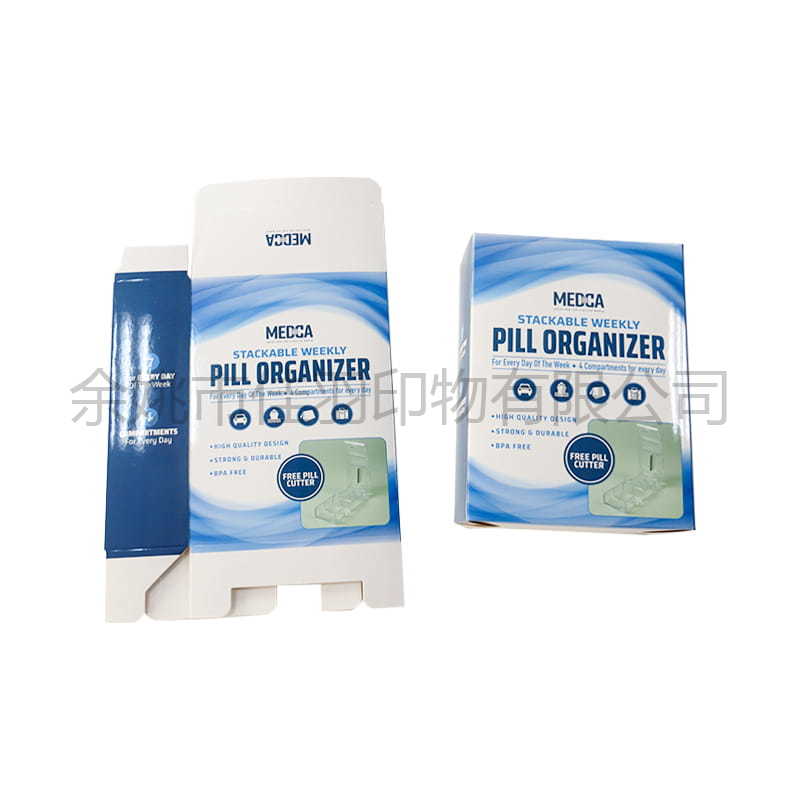 Custom White Card Color Paper Box for Gifts and AccessoriesA custom white-card box for gifts, accessories and collectibles; its smooth printable surface suits high-quality branding when selecting presentation packaging.View Product →
Blister cards and hang tags take the same logic. A 270 gsm to 300 gsm card has enough stiffness to hang straight on a peg without curling, and enough print quality for branding, barcodes and compliance text. The card must also hold a clean die-cut edge for slots, hooks and window openings.
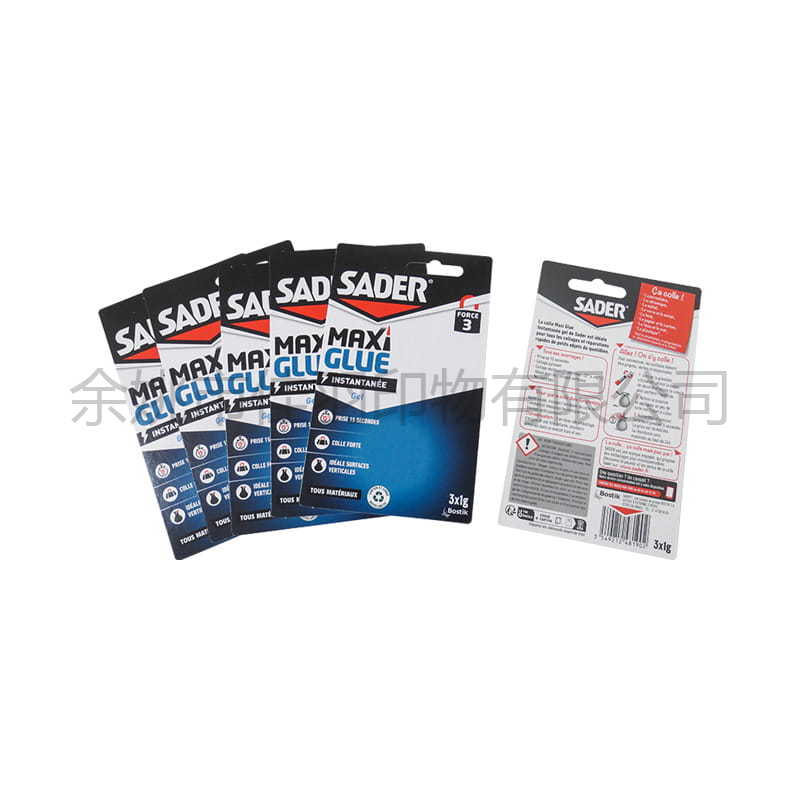 Custom White Horse Paper Blister Card with Clear FilmA custom whiteboard-paper blister card with transparent film for protecting and displaying retail items, relevant where a printable card needs clean presentation and recyclable material.View Product →
Gift and display boxes often push grammage up to 300 or 350 gsm for the lid and wall, since the sheet has to hold a window, a ribbon or a handle without buckling. In those projects, a lighter 270 gsm board still works as the inner tray, the sleeve or the insert, which keeps the box lighter for air freight.
 Custom Transparent Window Gift Box with Gold DecorationA wooden gift box with round clear windows, gold decoration and a customizable insert for jewelry or small gifts, letting contents show without opening.View Product →
Matching the sheet to the job is where our custom printing and packaging production adds value. We run 250 gsm to 350 gsm coated and uncoated board, from Heidelberg printing through die-cutting, scoring, windowing and gluing, so the weight you specify on paper is the weight that arrives in the box.
Keep the short version in mind: 270 gsm equals 100 lb cover, and that equivalence holds whenever the grade is cover stock. For text grades the answer becomes 183 lb, for index 149 lb, for bristol 123 lb, for tag 166 lb and for bond 72 lb. The grade name is not optional detail, it is the part that makes the number mean anything.
Before you send a paper specification, write both units side by side and include the grade. That single habit removes the most common source of reprint, waste and weight-related complaints in printed packaging work.

 English
 中文简体
 Español
 Deutsch




 No.71, Xiafan, Panxiang Village, Yangming Street, Yuyao City, China.
 491791889@qq.comsales@jiayuprint.com
 +86-13186866868
 +86-0574-62587484
