Yes, you can heat food in a paper bowl in most situations — but only if the bowl is labeled microwave-safe, and only for short heating periods at moderate power levels. Plain paper bowls without any coating or with a microwave-safe certification can handle brief reheating without catching fire or leaching harmful substances into food. However, paper bowls with metallic accents, plastic coatings, or wax linings should never be microwaved, and no paper bowl should be used in a conventional oven or on a stovetop. Understanding exactly which bowls are safe, under what conditions, and what the risks are when those conditions are not met is essential before you heat anything in a paper container.
Millions of people reheat leftovers, soups, and quick meals in paper bowls every day without incident — but millions of others unknowingly use the wrong type of bowl or heat for too long, resulting in soggy bowls, chemical migration into food, or in worst cases, fires. This guide covers everything you need to know to make the right decision every time.
What Makes a Paper Bowl Safe (or Unsafe) for Heating
Not all paper bowls are manufactured the same way, and their composition determines entirely whether they can be safely used in a microwave. The paper itself is rarely the problem — it is what the paper is coated or treated with that creates risks when heat is applied.
Plain Uncoated Paper Bowls
Uncoated paper bowls made from plain cellulose fibers are the safest option for microwave heating. Paper ignites at approximately 233°C (451°F) — far above the temperatures typically generated by a microwave during short reheating cycles of 1 to 3 minutes. The moisture in the food absorbs the majority of microwave energy, keeping the bowl well below its combustion point. However, uncoated paper bowls absorb moisture readily and can become structurally weak when heating wet foods like soups or stews, so they are better suited to drier foods or brief reheating of small portions.
Wax-Coated Paper Bowls
Many paper bowls are coated with a thin layer of paraffin wax to prevent moisture absorption and leakage. Wax coatings begin melting at temperatures as low as 50°C to 70°C (122°F to 158°F) — temperatures easily reached by hot food in a microwave within the first 60 seconds of heating. A melting wax coating migrates into food, creating a greasy, unpleasant film on the surface and potentially introducing trace hydrocarbons into the food. Wax-coated paper bowls should not be used in a microwave.
Plastic-Lined Paper Bowls
Many modern paper bowls — particularly those designed to hold soups, hot beverages, or wet foods — are lined with a thin film of polyethylene (PE) or polypropylene (PP) plastic to create a waterproof barrier. The safety of heating these bowls depends on which plastic is used and at what temperature. Polyethylene linings can begin to soften and potentially migrate into food when exposed to high temperatures for extended periods. Unless the bowl is explicitly certified as microwave-safe by the manufacturer, plastic-lined paper bowls should be treated with caution and heating limited to short intervals below 2 minutes.
Bowls with Metallic Decorations or Foil Linings
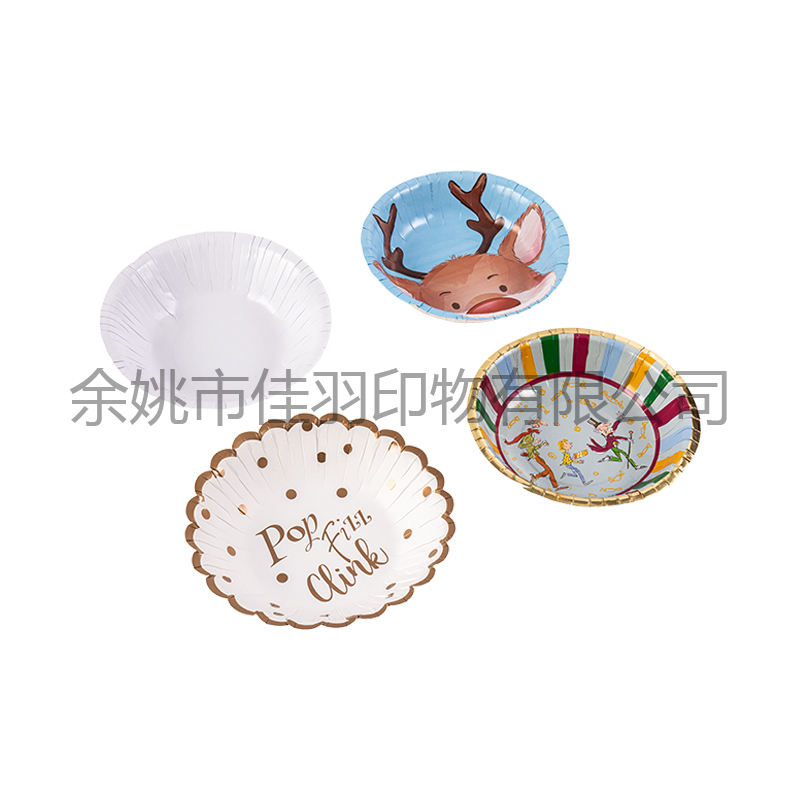
Some decorative paper bowls have metallic printing inks, metallic trim, or thin aluminum foil components in their construction. Metal in a microwave causes arcing — visible sparking — that can damage the microwave oven and start a fire. Any paper bowl with metallic elements must never be placed in a microwave under any circumstances, regardless of the duration or power level.
How to Identify If Your Paper Bowl Is Microwave-Safe
The fastest and most reliable way to determine whether a paper bowl can be safely microwaved is to look for explicit safety labeling. Manufacturers who test and certify their products for microwave use are required to communicate this clearly on the packaging.
- Microwave-safe symbol: Look for the microwave-safe icon on the base or side of the bowl — typically depicted as a microwave oven outline with wavy lines inside, sometimes accompanied by the text "microwave safe." This indicates the manufacturer has tested the bowl for safe use in microwave conditions.
- FDA compliance statement: In the United States, paper food packaging intended for microwave use must comply with FDA regulations governing food contact materials. A "microwave safe" claim on the packaging implies compliance with these standards.
- Check the packaging language: Terms like "suitable for microwave heating," "oven-safe to [temperature]," or explicit instructions for microwave use indicate the manufacturer has verified the product's suitability.
- When in doubt, don't: If there is no microwave-safe labeling and you cannot identify the coating material, transfer the food to a glass, ceramic, or microwave-safe plastic container. The few seconds it takes to transfer food are worth the safety assurance.
A useful home test for unlabeled bowls: place the empty bowl in the microwave with a separate cup of water beside it and run on high for 1 minute. If the bowl feels hot while the water cup is warm, the bowl is absorbing microwave energy — which means it is not truly microwave-safe and may degrade or leach materials into food when heated with food inside it. If the bowl remains cool or barely warm while the water heats normally, it is less likely to cause problems during normal heating.
Paper Bowl Safety by Heating Method: A Clear Comparison
The heating method matters as much as the bowl material. Paper bowls behave very differently depending on whether they are placed in a microwave, a conventional oven, or exposed to direct heat. The following table summarizes the safety profile for each method.
| Heating Method |
Safe for Paper Bowls? |
Risk Level |
Key Consideration |
| Microwave (labeled microwave-safe bowl) |
Yes — with conditions |
Low |
Short intervals; medium power; no metal elements |
| Microwave (unlabeled or wax-coated bowl) |
Not recommended |
Moderate |
Coating may melt or migrate into food |
| Conventional oven (any temperature) |
No |
High — fire risk |
Paper ignites at 233°C; oven air temps exceed this |
| Toaster oven |
No |
High — fire risk |
Exposed heating elements can ignite paper directly |
| Stovetop / open flame |
Never |
Extreme — immediate fire |
Paper will ignite immediately on direct heat contact |
| Air fryer |
No |
High |
High-velocity hot air and heating element proximity |
Safety comparison of heating paper bowls by different methods — microwave is the only viable heating option, and only with microwave-safe certified bowls.
Safe Microwave Heating Practices for Paper Bowls
Even when using a microwave-safe paper bowl, the way you heat food matters. Following these practices minimizes the small but real risks associated with heating food in paper containers.
Keep Heating Times Short
The longer a paper bowl is exposed to microwave energy, the greater the cumulative heat stress on the paper and any coating material. Limit microwave heating in paper bowls to 2 minutes maximum per session. If food needs longer heating — for example, a dense portion of leftovers — remove the bowl, stir the food to distribute heat, and return for additional brief intervals rather than running a single long cycle. Continuous heating for more than 2–3 minutes in a paper bowl increases the risk of the bowl softening, losing structural integrity, or allowing coating materials to migrate into hot food.
Use Medium Power Settings
Microwave ovens typically operate between 700W and 1,200W at full power. Running a microwave at full power concentrates intense energy into the food very quickly, and the bowl surface in contact with rapidly heated food reaches higher temperatures than at medium power. Using 50% to 70% power (often labeled as "medium" or "reheat" on microwave settings) allows food to heat more gradually and evenly, reducing the peak temperature the bowl must withstand at any given moment. This also produces better results for the food itself — less rubbery texture, more even heating throughout.
Cover the Bowl Loosely
Placing a loose cover — a microwave-safe plate, a paper towel, or a dedicated microwave cover — over the bowl during heating prevents moisture from evaporating too rapidly from the food. Moisture in the food is your primary protection against the bowl overheating, because water absorbs microwave energy and limits how hot the food and bowl surface can get. Do not seal the bowl tightly — trapped steam needs an escape path to prevent pressure buildup that could make the bowl pop or lid blow off.
Avoid Heating High-Fat or High-Sugar Foods
Water heats to a maximum of 100°C at atmospheric pressure in a microwave. But fats and sugars are not limited to this temperature — they can exceed 150°C to 200°C in a microwave, reaching temperatures that can cause paper bowls to scorch, deform, or fail even when food appears to still be heating normally on the surface. Foods with high fat content (rich sauces, butter-based dishes) or concentrated sugars (jams, candies, sweet sauces) should be transferred to a glass or ceramic container before heating, or heated only in very brief 15–30 second pulses with careful monitoring.
Check the Bowl's Condition After Heating
After removing a paper bowl from the microwave, briefly check its condition before eating from it. A bowl that feels structurally sound, shows no visible softening, discoloration, or greasy residue on the inside, and has not deformed is generally fine to use. If the bowl feels wet through, excessively soft, or shows any signs of coating separation — a shiny or greasy film on the food surface — discard the bowl and transfer food to a proper container before consuming.
Types of Food and How They Interact With Paper Bowls During Heating
Different foods create different risk profiles when heated in paper bowls. Understanding which foods are lower risk and which demand extra caution helps you make smart decisions in the moment.
- Soups and broths (lower risk): Water-based soups are among the safest foods to heat in a microwave-safe paper bowl. The high water content keeps temperatures at or below 100°C, which is within the safe range for most certified paper bowls. However, very long heating that drives off steam can allow the bowl to become excessively wet and structurally weak — stir and monitor every minute.
- Rice, pasta, and grains (lower risk with moisture): These foods reheat well in paper bowls when a small splash of water or broth is added before heating to maintain moisture content. Without added moisture, dry starches can become very hot and create localized high-temperature zones on the bowl surface.
- Vegetables and stews (moderate, monitor closely): Mixed dishes with vegetables are generally fine for short heating cycles but should be stirred at least once during heating to prevent any one area of the bowl from being in prolonged contact with particularly hot food.
- High-fat dishes — cheese sauces, butter-based foods, greasy meats (higher risk): These foods can reach temperatures significantly above 100°C. Fatty foods in a paper bowl should be heated only in very brief 30-second intervals at 50% power, with the bowl inspected between each interval. Better practice is to transfer to glass or ceramic.
- Sugary sauces, jams, caramel (avoid in paper bowls): Concentrated sugars can reach temperatures of 150°C or more in a microwave within seconds. These temperatures will compromise virtually any paper bowl coating and create a fire or burns risk. Always use glass or ceramic for heating sugar-concentrated foods.
- Frozen foods (reheat in dedicated container): Frozen foods require longer heating cycles to bring the food from below freezing to serving temperature, increasing total exposure time for the bowl. Unless the paper bowl packaging explicitly states it is safe for frozen food reheating, transfer to a proper microwave-safe container.
Chemical Migration: What You Need to Know
One of the most frequently raised concerns about heating food in paper bowls is chemical migration — the transfer of substances from the bowl material into the food when heat is applied. This is a legitimate concern worth understanding clearly, because the answer is more nuanced than a simple yes or no.
PFAS Coatings in Paper Food Containers
For many years, paper food containers were treated with per- and polyfluoroalkyl substances (PFAS) — a class of chemicals used to create grease-resistant, water-resistant surfaces. Research has shown that PFAS chemicals can migrate from packaging into food, particularly when the food is hot, fatty, or acidic. Regulatory agencies including the US FDA and the European Food Safety Authority have been progressively restricting PFAS use in food packaging. Many manufacturers have transitioned to PFAS-free alternatives, but not all — particularly older stock or inexpensive imported products. Look for paper bowls explicitly labeled "PFAS-free" or "free from fluorinated coatings" if this is a concern.
Polyethylene Lining Migration
Polyethylene (PE) is the most common lining material for paper food containers. PE is generally considered food-safe at normal use temperatures and is approved by regulatory agencies for food contact. However, at elevated temperatures — particularly above 80°C to 100°C sustained for extended periods — there is evidence that low levels of compounds can migrate from PE into food. The practical implication is that brief reheating of moderate-temperature foods in PE-lined paper bowls carries minimal risk, while prolonged heating of very hot or fatty foods increases migration potential. The regulatory position in most jurisdictions is that PE-lined paper bowls carrying microwave-safe certification have been tested to confirm migration at or below established safety thresholds for normal use.
Inks and Dyes
Decorative printing on the exterior of paper bowls uses inks that are formulated to be food-safe when in indirect contact. When bowls are microwaved, the exterior ink is not in contact with food — the interior food contact surface is what matters. However, if the printing is on the interior surface of the bowl (uncommon but found on some decorative products), or if the bowl is so thin that ink compounds can penetrate through to the interior, migration risk is higher. Premium paper bowl manufacturers use only food-contact-approved inks on exterior surfaces and keep interior surfaces free of printing ink.
Paper Bowls vs. Other Containers for Microwave Heating: Which Is Actually Better?
Paper bowls occupy a middle ground in the range of available microwave-safe containers. Understanding where they stand relative to alternatives helps you make informed choices depending on the situation.
| Container Type |
Microwave Safe? |
Migration Risk |
Best For |
Limitations |
| Glass (borosilicate) |
Yes — ideal |
None |
All food types; extended heating |
Heavy; breakable; may get very hot |
| Ceramic / stoneware |
Yes (check for metallic glaze) |
Negligible |
Most food types; everyday use |
Heavy; some glazes may contain lead |
| Microwave-safe plastic |
Yes (when labeled) |
Low at normal use; higher at sustained high temp |
Lightweight; reusable; convenient |
Degrades with repeated high-temp use |
| Paper bowl (microwave-safe labeled) |
Yes — with time limits |
Low for short heating of water-based foods |
Short reheating; disposable convenience |
Not for long heating, fatty or sugary foods |
| Styrofoam / polystyrene |
Only if labeled |
Moderate — styrene migration at heat |
Cold food storage only when unlabeled |
Chemical migration risk; not eco-friendly |
| Aluminum / metal containers |
Never |
Arcing and fire risk |
Conventional oven only |
Damages microwave; fire hazard |
Microwave safety comparison across common container types — glass and ceramic remain the gold standard; paper bowls are acceptable for brief reheating of appropriate foods.
Environmental Considerations: Paper Bowls and Sustainable Heating Choices
Beyond safety, choosing to heat food in a paper bowl has environmental implications that are worth considering as part of a complete picture.
Paper bowls are typically single-use items. From a lifecycle perspective, using a glass or ceramic bowl that you wash and reuse is significantly more resource-efficient than using a new paper bowl each time you reheat food. The manufacturing of paper bowls — particularly those with plastic or chemical coatings — involves resources and chemical processes that contribute to environmental footprint even before the bowl reaches a landfill.
However, paper bowls do have a meaningful role in specific contexts: large gatherings where washing large quantities of dishes is impractical, food service environments, outdoor events, and situations where water or dishwashing resources are limited. In these contexts, choosing paper bowls over polystyrene is the more environmentally responsible single-use option, as paper is biodegradable and more widely recyclable than most plastics — provided the bowl is uncoated or coated with a compostable material. Many PE-lined paper bowls are not recyclable in standard paper streams because the plastic lining cannot be separated during standard paper recycling processes.
Bowls certified as compostable — typically lined with PLA (polylactic acid), a plant-derived bioplastic — can be composted in industrial composting facilities, though they do not break down effectively in home compost heaps or standard landfill conditions. If sustainability is important to your choices, look for bowls certified to industrial composting standards such as ASTM D6400 or EN 13432.
Common Situations and Practical Guidance
The following scenarios address the most common real-world situations where people question whether heating food in a paper bowl is appropriate.
Reheating Takeout Soup From a Paper Container
Many takeout containers for hot soups are paper with a plastic liner. If the container is labeled microwave-safe, brief reheating (1–2 minutes at medium power with the lid partially open) is generally acceptable. If there is no microwave-safe label, transfer the soup to a glass bowl or mug before reheating. Takeout containers are often not certified for microwave use, even when they have been holding hot soup — they are designed to hold food at temperature, not to withstand microwave energy.
Using Party Paper Bowls for Heating at Events
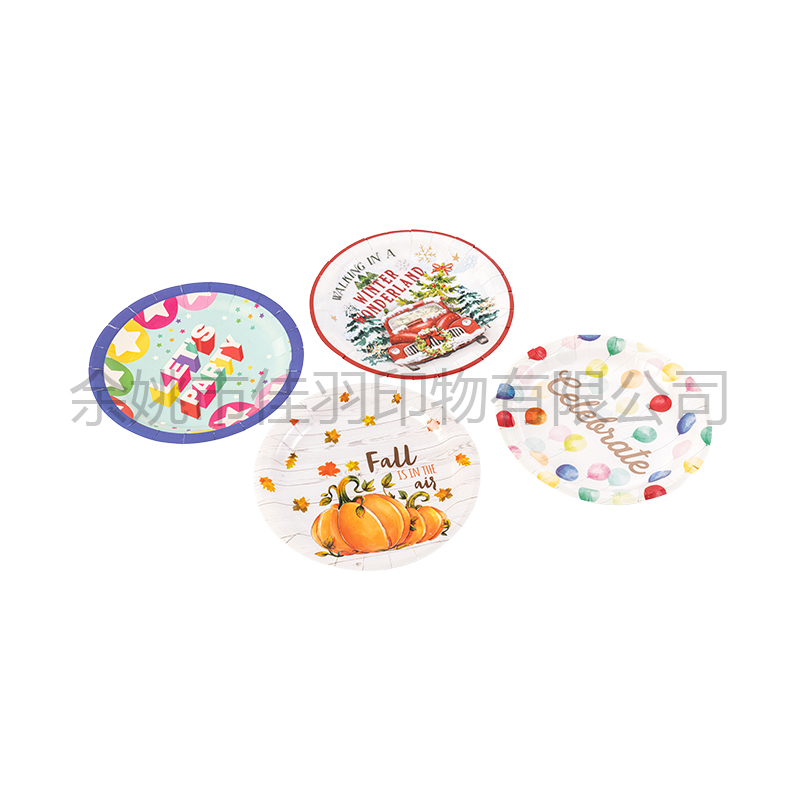
Colorful party paper bowls with decorative printing are almost universally not certified for microwave use, and many have wax coatings for stiffness. Do not microwave food in party-style paper bowls. For events where warming food in individual portions is desired, use microwave-safe ceramic or glass bowls, or transfer to appropriately certified disposables before heating.
Camping and Outdoor Situations Without Microwave Access
Paper bowls and campfire heating are completely incompatible — a paper bowl over a flame or a camp stove will catch fire within seconds. For outdoor cooking situations, use only heat-safe metal or enamel cookware over the heat source, and serve into paper bowls only after food is already at serving temperature. Paper bowls in outdoor settings are for serving, not cooking or heating.
Instant Noodles in a Paper Bowl
Many instant noodle cup products come in paper-based bowls designed specifically to accept boiling water poured directly in — not for microwave heating of the cup itself. Unless the packaging explicitly says "microwave in cup," the correct method is to pour boiling water into the cup, cover, and wait the specified time. Microwaving an instant noodle cup not certified for microwave use can cause the interior coating to degrade and may result in a soggy, structurally failed cup that cannot be safely handled when hot.
Summary: The Rules for Safely Heating Food in a Paper Bowl
Following these straightforward rules covers the vast majority of situations where you might consider heating food in a paper bowl:
- Check for the microwave-safe label first. If it is not there, transfer food to glass or ceramic before heating.
- Limit heating to 2 minutes maximum per session. For longer heating, use intervals with stirring in between and consider switching to a proper container.
- Use medium power (50–70%) rather than full power. This reduces peak temperatures and heat stress on the bowl material.
- Avoid heating fatty, oily, or very sugary foods in paper bowls. These exceed 100°C in a microwave and can damage the bowl and migrate coating materials into food.
- Never use a paper bowl in a conventional oven, toaster oven, air fryer, or on any direct heat source. These environments exceed paper's ignition temperature.
- Inspect the bowl after heating. Any sign of structural failure, coating separation, or greasy residue on food means the bowl has compromised — transfer food and discard the bowl.
- When in doubt, use glass or ceramic. These materials carry no migration risk, handle any heating duration, and are safe for all food types — making them the universally correct choice when you are uncertain about a paper bowl's suitability.
Paper bowls are a practical, convenient tool for serving and short-term reheating of appropriate foods in a microwave. They are not a substitute for proper cookware, and they have clear limitations that must be respected. Used within those limitations — and only when microwave-safe certified — they perform their function safely and reliably.
 English
 中文简体
中文简体 Español
 Deutsch
 No.71, Xiafan, Panxiang Village, Yangming Street, Yuyao City, China.
 491791889@qq.comsales@jiayuprint.com
 +86-13186866868
 +86-0574-62587484