Paper cups are primarily used as single-use or limited-use containers for serving hot and cold beverages, and secondarily for portioning food, dispensing liquids in medical and industrial settings, and supporting hygiene-critical applications where reusable vessels are impractical. Their core function is to hold liquid contents safely — without leaking, softening structurally, or transferring harmful substances — for the duration of consumption or use. Globally, an estimated 500 billion to 600 billion paper cups are produced annually, reflecting their central role in food service, healthcare, office environments, events, and retail packaging across virtually every sector of the economy.
Hot Beverage Service: The Largest Single Use
Serving hot beverages — coffee, tea, hot chocolate, and similar drinks — accounts for the largest share of global paper cup consumption. The paper cup is engineered for this application through its multi-layer wall construction: a base paperboard layer provides structural rigidity, and a polyethylene (PE) or polylactic acid (PLA) inner coating creates a moisture barrier that prevents the paperboard from absorbing liquid and losing structural integrity. For hot drinks, double-wall or ripple-wall paper cups add an insulating air gap that allows the cup to be held comfortably without a separate sleeve even when the contents are at 70–85°C.
- Coffee shops and quick-service restaurants — the standard take-away coffee cup in sizes from 8 oz (240 ml) to 20 oz (590 ml) is the defining format of the hot beverage paper cup market. These cups are used for espresso-based drinks, drip coffee, and tea, typically with a plastic or paper lid.
- Office and workplace beverage stations — automatic hot beverage machines and coffee dispensers in offices, waiting rooms, and canteens use smaller 4–7 oz paper cups (120–210 ml), providing a hygienic, zero-washing solution for high-turnover communal areas.
- Event and catering service — concerts, sports events, exhibitions, and outdoor catering operations where washing facilities are unavailable or impractical depend almost entirely on paper cups for hot drink service.
Cold Beverage Service: Soft Drinks, Water, and Frozen Beverages
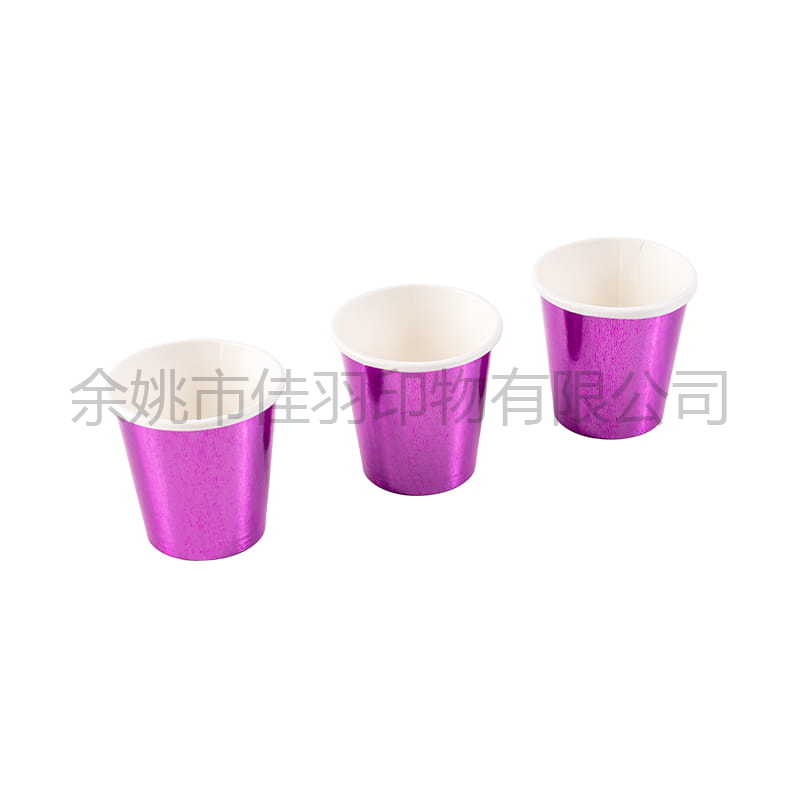
Cold drink paper cups are the second largest application category. These cups use a heavier PE coating than hot drink cups to resist the condensation and external moisture exposure that occurs when cold liquids are served. They are also typically waxed or double-coated on the exterior to prevent the cup from becoming soft and difficult to hold when condensation forms on the outer wall.
- Fast food and fountain drinks — paper cups in sizes from 12 oz (355 ml) to 44 oz (1.3 L) are used at fast food counters and self-service soda fountains globally for soft drinks, iced tea, lemonade, and water. These cups are designed to hold ice and carbonated liquid for up to 30–45 minutes without the base softening.
- Water dispensers — small 3–5 oz (90–150 ml) cone-shaped or flat-bottomed paper cups are used at water dispensers in offices, gyms, healthcare facilities, and public spaces. The cone cup design, which requires a holder, is particularly associated with water cooler dispensing and uses minimal material per unit.
- Smoothies, milkshakes, and frozen drinks — the physical properties of paper cups — lightweight, printable, and compostable in PLA-coated versions — make them preferred over plastic cups in many smoothie bars and cold specialty drink operations targeting sustainability-conscious consumers.
Food Portioning and Serving Applications
Beyond beverages, paper cups serve important food portioning and serving functions across multiple foodservice contexts. Their defined volumes, lightweight construction, and printability make them practical for portion control and branded food presentation.
- Ice cream and frozen desserts — paper cups lined with PE or wax coatings are used to serve single-portion ice cream, gelato, frozen yogurt, and sorbet. The cup maintains the frozen product without structural failure for the typical 5–15 minutes of consumption time and is an alternative to wafer cones in foodservice operations.
- Condiment and sauce cups — small 1–4 oz paper soufflé cups or portion cups are used in restaurants, cafeterias, and food trucks to serve ketchup, mayonnaise, dipping sauces, salad dressings, and other condiments. These minimize cross-contamination compared to communal sauce bottles and allow precise portion control.
- Dry snack portioning — nuts, candies, popcorn, and similar dry snacks are served in open-top paper cups at concession stands, cinemas, and event venues. The cup provides a branded, hygienic container that is cheaper and lighter than rigid paperboard boxes for small-portion snack service.
- Soup and instant noodle cups — larger double-wall paper cups with PE-coated interiors are used to package and serve instant soups, noodles, and oatmeal as primary packaging. The consumer adds boiling water directly to the cup, and the double-wall construction insulates the contents and allows safe handling during the soaking and eating process.
Medical and Healthcare Uses
In healthcare settings, paper cups serve critical hygiene and infection control functions that go beyond simple beverage service. Their single-use nature eliminates cross-contamination risks that would be present with reusable cups, making them indispensable in clinical environments.
- Medication dispensing — small 1–2 oz (30–60 ml) paper medicine cups are used by nurses and pharmacists to dispense oral medications, reducing the risk of dosing errors and providing a hygienic, patient-specific container for each medication administration event. Their disposability eliminates the risk of cross-contamination between patients that would exist with reusable medication cups.
- Patient hydration — paper cups at hospital bedside water carafes, ward water dispensers, and dental office rinse stations provide hygienically separate cups for each patient or use, supporting infection prevention protocols.
- Dental and oral hygiene — the classic dental office paper cup used for mouth rinsing is one of the most recognizable healthcare applications. Small 3–5 oz cups at dental chairs and in home bathroom dispensers provide individual-use rinsing vessels during brushing, flossing, and professional cleaning procedures.
- Laboratory specimen collection — medical-grade paper cups are used for urine specimen collection in point-of-care testing environments. Their disposability and the ability to label and identify each sample make them standard equipment in diagnostic laboratories and general practice clinics.
Paper Cup Types by Application
| Cup Type |
Typical Size Range |
Wall Construction |
Primary Application |
| Single-wall hot cup |
4–20 oz (120–590 ml) |
Single PE or PLA-coated paperboard |
Coffee, tea (with sleeve) |
| Double-wall hot cup |
8–16 oz (240–475 ml) |
Two PE-coated layers with air gap |
Premium coffee, no sleeve needed |
| Cold drink cup |
12–44 oz (355 ml–1.3 L) |
Heavy PE coating inside and out |
Soft drinks, iced beverages |
| Cone cup |
3–5 oz (90–150 ml) |
Single wax or PE coating |
Water dispensers (requires holder) |
| Portion / soufflé cup |
1–4 oz (30–120 ml) |
PE-coated paperboard |
Condiments, sauces, medications |
| Noodle / instant food cup |
8–16 oz (240–475 ml) |
Double-wall PE-coated, with lid |
Instant soups, noodles, oatmeal |
| Medical / dental cup |
1–5 oz (30–150 ml) |
Uncoated or lightly waxed |
Medication dispensing, rinsing, specimen collection |
Common paper cup types with their typical size ranges, wall construction, and primary application context.
Industrial, Craft, and Non-Food Uses
Beyond food, beverage, and healthcare, paper cups serve a range of practical purposes in industrial, craft, and everyday organizational contexts where their low cost, disposability, and availability make them a convenient utility item.
- Paint and adhesive mixing — paper cups are widely used in workshops, auto body shops, and home improvement projects as disposable mixing vessels for small quantities of paint, epoxy resin, wood glue, and similar materials. Their low cost makes them preferable to reusable containers that must be cleaned with solvent after each use.
- Arts and crafts — in schools and hobby contexts, paper cups serve as paint pots, brush holders, mold forms for plaster or concrete craft projects, and general-purpose organizational containers for small items such as beads, buttons, and seeds.
- Seed starting and plant propagation — biodegradable paper cups without wax or PE coating can be used as temporary seedling containers in home gardening and nursery applications. The seedling and cup can be planted together, with the paper biodegrading in the soil over several weeks — eliminating transplant shock from root disturbance.
- Component and part organization — in electronics assembly, jewelry making, model building, and similar precision hobbies or light manufacturing, paper cups serve as low-cost sorting containers for small components such as screws, resistors, and gems during assembly operations.
Environmental Considerations and Sustainable Paper Cup Alternatives
The widespread use of paper cups has prompted significant attention to their environmental impact, particularly in the context of single-use plastics reduction policies and circular economy objectives.
- Recyclability challenge — conventional PE-lined paper cups are difficult to recycle in standard paper recycling streams because the plastic lining must be separated from the paperboard. Only a limited number of specialized paper mills have the hydropulping technology to process PE-lined cups. This means the majority of paper cups in most countries currently go to landfill or incineration despite being predominantly paper by weight.
- PLA-lined compostable cups — replacing PE with PLA (polylactic acid, derived from plant starch) produces cups that are industrially compostable in certified composting facilities, breaking down in 60–90 days under controlled composting conditions. However, they cannot be composted in home compost bins or standard recycling and require access to industrial composting infrastructure to realize their environmental benefit.
- Aqueous coating cups — water-based barrier coatings applied in thin layers on the inside of paper cups are emerging as a recyclable alternative to PE lining. These cups can be processed in standard paper recycling streams, and several municipalities have begun accepting them in paper recycling collection.
- Reusable cup incentive programs — many food service operators now offer discounts of 10–50 cents per purchase to customers who bring a reusable cup, reducing the total volume of single-use paper cups consumed while retaining the convenience model of take-away beverage service.
 English
 中文简体
中文简体 Español
 Deutsch
 No.71, Xiafan, Panxiang Village, Yangming Street, Yuyao City, China.
 491791889@qq.comsales@jiayuprint.com
 +86-13186866868
 +86-0574-62587484